This will be a social media driven FIFA World Cup and it will be interesting to see the ways in which the tournament, media and associations create content that will engage a likely more youthful audience than was the case even as recently as the Men’s finals of six months ago in Qatar.
The players themselves are likely to play a bigger part though there will be some individual restrictions.
The England team had been advised by their manager that once they stepped on the plane that they were to restrict their use of all social media channels only to limited content focused on the team.
Overnight this was eased after discussion with the players so that they will now be free to use and post to their personal accounts without restriction up until the start of the tournament.
The reality is that those who are making the decisions on what is good and what is distracting are from at least half a generation removed from the players and their audiences.
Alisha Lehmann of Switzerland has 13.4 million followers on Instagram, with Alex Morgan the other player to have hit ten figures.
The most popular of the England team is Alessia Russo with around half a million. She completed her transfer from Man United to Arenal this week prior to her departure.
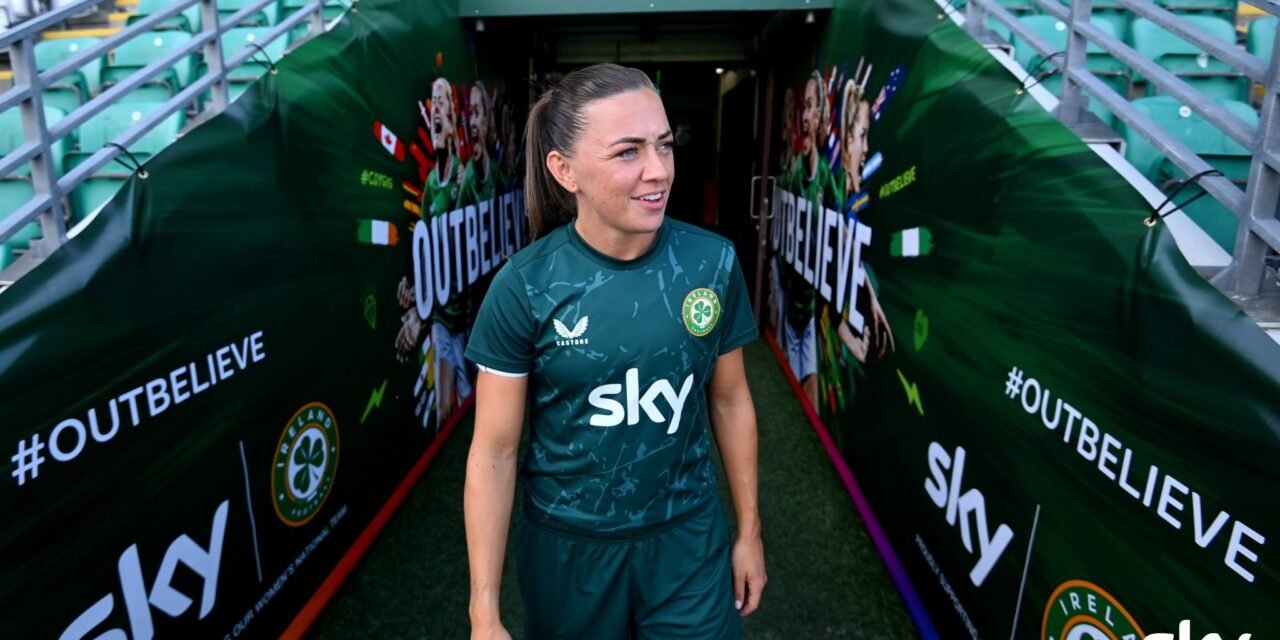
Katie McCabe is the top Irish star on the platform with just short of 200,000 followers.
The Ireland Football account which generated 3.2 million views on twitter last week with the video content revealing the Squad announcement has 275,000 followers and will be fully focused on the action down under.
Sport for Business Perspective:
This is an opportunity to capture the hearts and minds of a new football audience and the storytelling around the tournament has to be in the language of the young.
Media needs to focus on covering the story from a slightly different perspective to what would be seen as the traditional manner.
It is a key area of how the World Cup will be seen, what it’s long term impact will be, and we will be following it faithfully throughout.