At the majestic Carton House, the 2025 Sport for Business “Business of Golf” event brought together leaders and innovators in Irish golf to explore the sport’s evolving role in society, its growing economic footprint, and the bold new ideas pushing it into the future.
With the KPMG Women’s Irish Open setting the stage, the event’s opening sessions captured a sport that is growing rapidly and embracing change, from grassroots to green tech.
Golf’s Economic Power: More Than a Game
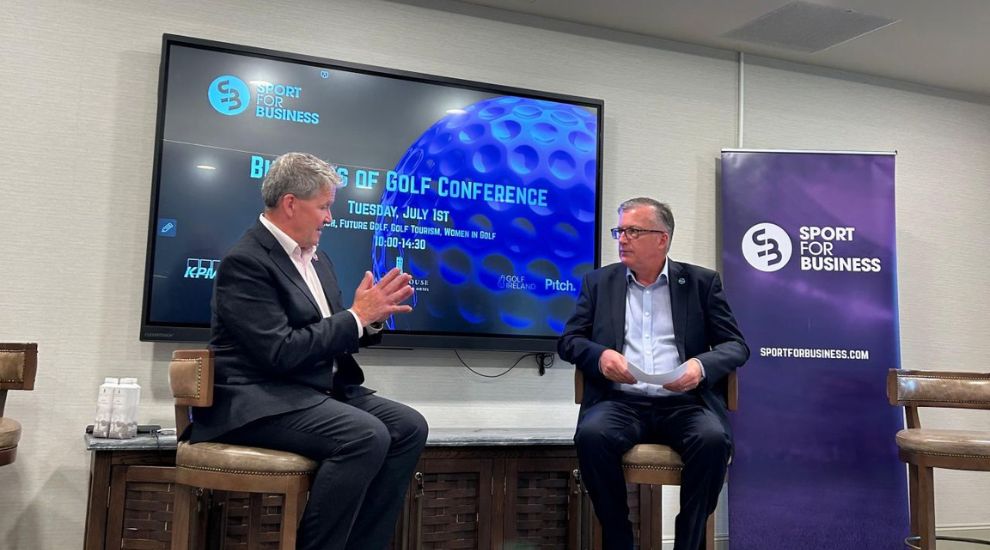
In a conversation led by Sport for Business founder Rob Hartnett, Golf Ireland CEO Mark Kennelly shared the findings of a landmark study into the economic impact of golf in Ireland.
The headline figure — a staggering €717 million — prompted a round of applause, setting the tone for a discussion on how the sport is not only surviving but thriving.
“Membership is up over 20% compared to 2019,” Kennelly noted. “But even more striking is the number of people playing golf who aren’t members of clubs — at least 350,000. Add in pitch and putt, driving ranges, virtual golf, and our total engagement reaches 800,000.”
That figure represents one in six people on the island. With 10% of the population playing traditional golf at least once a year and an even broader demographic engaging through newer formats, Ireland’s golfing community is more vibrant and diverse than ever.
Golf Ireland’s strategic vision, launched in 2021, is underpinned by data and a commitment to inclusivity. The organisation has moved beyond anecdote, running quarterly Golf Barometer surveys to track attitudes and participation.
These surveys have revealed a consistent growth trajectory, especially among casual players, women, and younger demographics.
Inclusion and Community: Golf’s Social Impact
Kennelly was keen to stress that golf is not just about economics — its social value is equally significant. Initiatives such as Golf Ireland’s national school program, which has already reached 180 schools and hundreds of teachers in under a year, are broadening access to golf in non-traditional communities.
“The demand has been fantastic,” he said. “The split between boys and girls participating is almost 50/50. That’s really encouraging.”
Accessibility is also being tackled at the club level, with short courses and inclusive design making golf more manageable and enjoyable for older and less mobile players.
“We now provide grants for physical upgrades and support awareness days that have brought over 1,200 people with disabilities into our network,” Kennelly said.
Golf Ireland’s partnership with Special Olympics, as well as the success of Irish disability golfer Brendan Lawlor, highlight a powerful message: golf can — and should — be for everyone.
The Power of Visibility and Events
The importance of elite competition as an inspiration tool was a recurring theme, particularly with the conference being part of the build up to the KPMG Women’s Irish Open.
Kennelly and Hartnett praised the courage of tournament organisers and sponsors for bringing the women’s event back to life.
“We now have five Irish players on the Ladies European Tour, and 16 Irish women playing at Carton this week — a record,” said Kennelly. “Seeing these role models up close has a huge ripple effect.”
From major tournaments like the Irish Open and the return of The Open Championship to Royal Portrush, to the excitement generated by global superstars like Rory McIlroy and Padraig Harrington, visibility is fueling growth across the board.
A New Kind of Club: Virtual Golf Takes Off
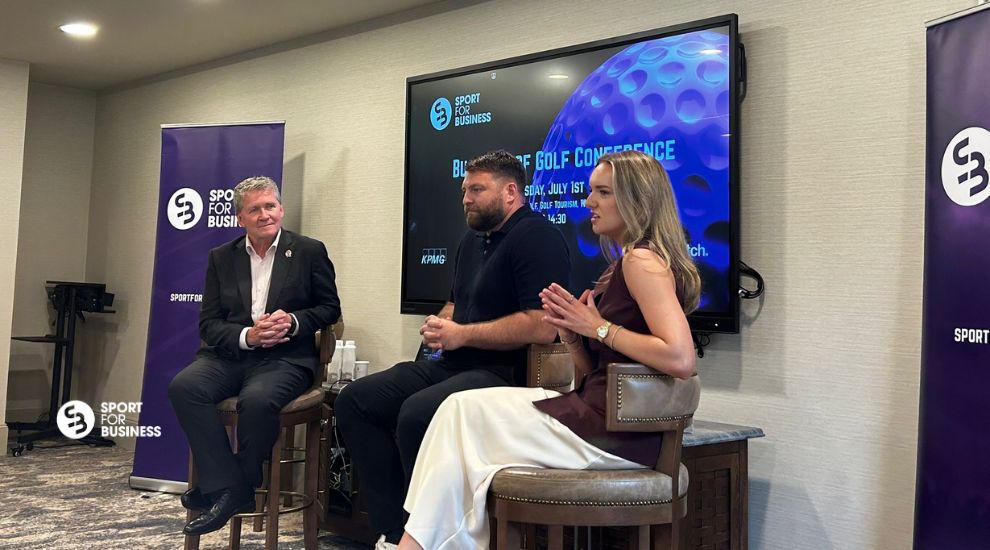
From the long fairways of Carton House, the conversation shifted to an urban space that’s redefining what golf can be: Dawson Street, Dublin.
There, the newly opened Pitch venue offers a stylish fusion of tech, hospitality, and serious golfing ambition.
“Pitch is about bringing more people into golf — plain and simple,” said co-founder Chris Best. “We’re not trying to replace traditional clubs. We’re complementing them.”
With state-of-the-art TrackMan technology, PGA coaches, and a bar that feels more Soho House than clubhouse, Pitch has quickly become a hit. According to Roisin Sherry, who manages events and inclusion at Pitch, the venue has opened the door to many who would never have considered playing golf.
“You walk in and see groups of friends — women, men, people from all backgrounds — laughing, hitting balls, playing games like Scrap Yard on screen,” she said. “It’s fun and it’s non-intimidating.”
Beyond the casual players, Pitch also caters to serious golfers with a members-only area and performance bays. “Some people are there to improve, others just to have fun. We don’t think those things should be mutually exclusive,” added Best.
Building a Community for Women in Golf
One of Pitch’s most ambitious new projects is a dedicated Women’s Golf Academy, designed to support women at the start of their golfing journey — many of whom may never have held a club before.
“It’s about more than coaching,” said Sherry. “It’s about creating a comfortable space to learn, to meet new people, to build confidence.”
The program will run six bi-monthly events and aims to reach 250 women with PGA coaching, equipment access, and community support.
Pitch is currently seeking a brand partner to help scale the project, which they see as a catalyst for long-term inclusion.
“The old boys’ club is being reimagined,” said Hartnett. “And it’s about time.”
Green Grass and Beyond
Virtual golf may once have been considered a novelty, but global trends suggest it’s here to stay. In the U.S., there are now more indoor rounds than traditional ones. Best noted that 98% of simulator players say it increases — not replaces — their real-world golf participation.
This integration between innovation and tradition is a theme that resonated across the event. Whether through urban golf hubs, public park initiatives like the Marlay Park Putting Green (championed by Padraig Harrington), or accessible school programs, golf is entering a new era — one where the barriers of price, geography, and perception are being gradually dismantled.
Charting a Bold Future for Tourism and Women’s Participation
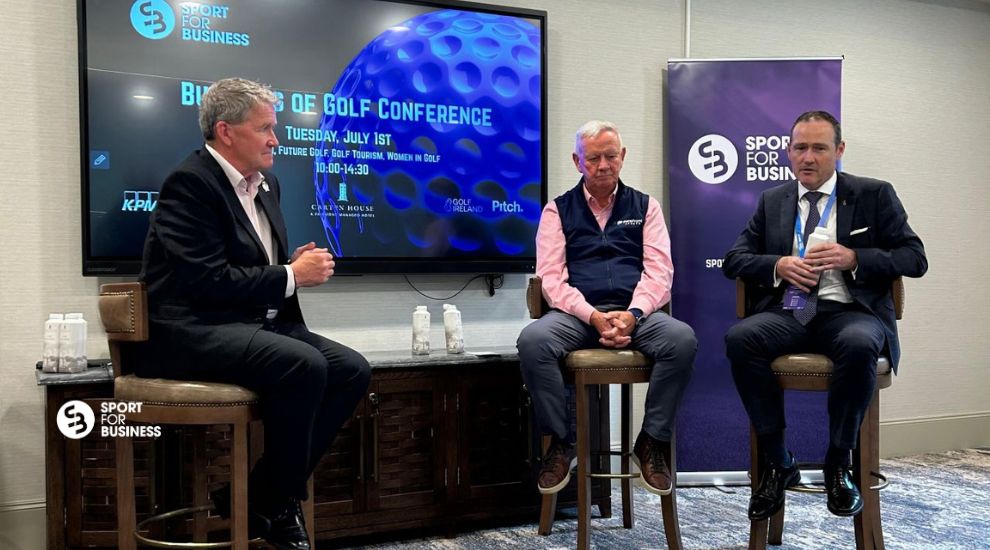
As the second half of the Sport for Business ‘Business of Golf’ morning at Carton House got underway, host Rob Hartnett brought the audience gently back from the buzz of networking with a reminder of what was still to come.
The conversations off stage were lively, but what followed on stage would prove just as significant.
First up: the value of golf as a cornerstone of Irish tourism. Then, the rapid rise of women’s golf – both at the top of the game and, just as crucially, at its grassroots.
Golf’s Value to Irish Tourism
Ireland’s status as a global golf destination is well known, but the discussion with Carton House General Manager Martin Mangan and global golf strategist Roddy Carr laid bare the hard numbers, and the evolving strategies behind them.
Carr spoke from deep personal experience, drawing on his decades working with IMG and tourism boards across the world. His segmentation of the market—from ‘trophy hunters’ chasing the world’s top links to ‘trip of a lifetimers’ seeking a dream experience was a masterclass in customer understanding.
“There are 7 million Americans who want to come here once in their lifetime to play,” he said. “Cost is not the most important element. The trophy hunter will spend €7,500 on the trip—and that’s before the fine wine and the shopping.”
Martin Mangan echoed the point, noting that while golf makes up about 20% of Carton House’s direct business, it accounts for much more when indirect activity is factored in—members, green fees, and stay-and-play guests. With the hotel’s domestic-to-international ratio now at 50:50, North America accounts for roughly a quarter of its business.
And the power of events cannot be overstated. Hosting the KPMG Women’s Irish Open has given Carton House a global spotlight.
“Over 100 million people saw Carton House through media last year,” said Mangan. “You couldn’t buy that exposure. We had 37,000 visitors, many of whom had never been here before.”
Carr, meanwhile, looked to the horizon, arguing passionately for the development of four to five additional trophy links courses in Ireland to meet surging demand.
“There are thousands of acres of dunes in Ireland,” he said. “If we can build sustainably, the long-term economic impact on rural communities is immense. You’re investing in jobs and tourism for the next 50 years.”
“If You Can’t See It, You Can’t Be It” – The Rise of Women’s Golf
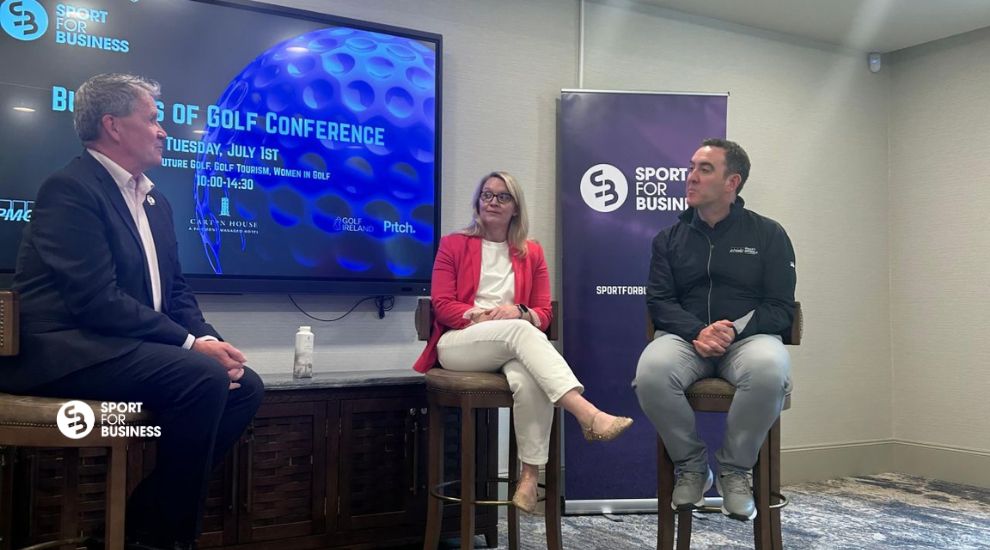
From hard economics to cultural momentum, the final session of the day brought together Stephen King of KPMG and Tracey Bunyan of Golf Ireland for a look at what may be golf’s most exciting growth opportunity: women’s participation.
For KPMG, backing the Women’s Irish Open was a natural extension of their 20×20 commitment. Visibility, said King, is everything.
“In 2018, we were part of the 20×20 campaign. That idea—’If you can’t see it, you can’t be it’—stuck with me. My daughter was just born at the time. This isn’t just good sport. It’s important.”
Now in its fourth year of sponsorship, the tournament has grown from six Irish players in the field to 16. The crowds have more than doubled. This year’s Pro-Am, hospitality, and general admission demand has been off the charts.
“Leona [Maguire] carried a lot of weight in those first years,” said King. “Now there are dozens of role models—and the field is stronger than ever. It’s no longer just about one player. It’s about an entire generation.”
Bunyan outlined the wider context from Golf Ireland’s point of view.
Currently, women make up 20% of club members across the island—well ahead of England and Scotland, but with significant room for growth. The goal is to reach 25% by the end of 2026.
Initiatives like ‘Chip and Chat’—a relaxed, social version of introductory golf—and ‘Get Into Golf’ are building the pipeline. Last year, over 3,000 women took part in the latter, with a remarkable 58% converting into full members.
“We’re meeting women where they are,” said Bunyan. “It’s not just about competition. It’s about health, social connection, and feeling welcome.”
Changing the Image of Golf—One Role Model at a Time
King and Bunyan both stressed how crucial it is that young girls – and women of all ages – see relatable role models. From Leona Maguire to golfing and social media stars like Annabel Dimmock and Charlie Hull, visibility is having a powerful ripple effect.
“Last year, I brought my eight-year-old daughter,” said Bunyan. “By Sunday night, she had me Googling Annabel’s tracksuit and was signed up to our local golf club. That’s what this event can do.”
KPMG’s First Tee initiative has also helped bridge the gap between sport and society. This year, Paralympian Ellen Keane, fitness influencer Natalie Lennon, and former international footballer Stephanie Zembra took up golf over a 12-week program and will play in the Pro-Am alongside KPMG clients and partners.
“They’ve been open, vulnerable, and relatable,” said Bunyan. “And they’ve shown that it’s never too late to start.”
Golf for All: The Sport for a Lifetime
In closing, both speakers highlighted the unique strengths of golf that lend themselves to wider societal benefit.
“This is a sport where you can play with your mother, your child, and your grandfather—at the same time,” said King. “That’s pretty special.”
Bunyan added that Golf Ireland is now focused on creating life-stage pathways that support participation at every point in someone’s journey—from early childhood to senior years, and from recreational players to elite competitors.
“We’re designing programs that welcome people in, support them, and make it easy to return to the game, even if life gets in the way for a while,” she said. “And with Sport Ireland’s Women in Sport policy as a foundation, we’re investing in long-term, systemic change.”
Golf, they concluded, is more than a game. It’s a driver of tourism, a platform for visibility, and a tool for inclusion. It’s a sport for everyone—and Ireland, more than anywhere, is showing what that looks like in practice.
Sport for Business Events

Find out More about Our Sport for Business Events Programme Here
The Latest Sport for Business Podcasts
Further Reading for Sport for Business members:
Check out more of our Sport for Business coverage of Golf
WHAT’S UP NEXT?
Sport for Business is in planning for major events bringing together leaders in Irish Sport and Business across a range of subjects in the second half of the year.
On Thursday, August 29th we will host a special event looking at Future Proofing Irish Sport including the use of AI in sport.
Find out More about Our Sport for Business Events Programme Here
MEMBERSHIP AND EVENTS
KPMG, ForeFront Sports, and Golf Ireland, as well as all the leading sporting and business organisations in and around the world of sport are among the 300+ members of the Sport for Business community.
This includes all of the leading sports and sponsors, as well as commercial and state agencies, individuals interested in our world, and an increasing number from beyond these shores taking a keen interest in Ireland.
Find out more about becoming a member today.
Get the full benefit of a Sport for Business membership by joining us at one of our upcoming events, where sporting and business leadership come together.
Or sign up for our twice-daily bulletins to get a flavour of the material we cover.
Sign up for our News Bulletins here.