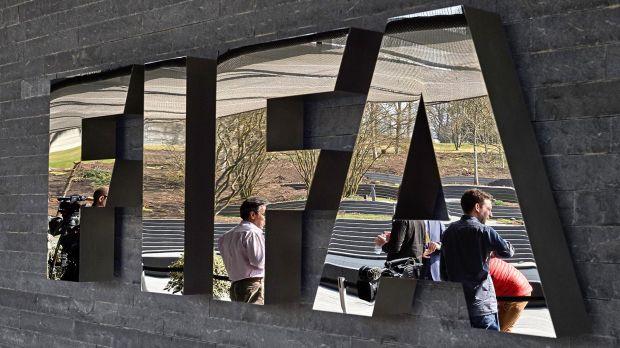
FIFA’s attempt to bring private investors into the commercial operation of the World Cup has been abandoned, but the extraordinary dispute it created is now threatening the position of FIFA President Gianni Infantino.
Infantino confirmed on Saturday that the FIFA Forward Enterprise proposal would not proceed after UEFA’s 55 member associations unanimously threatened to boycott FIFA competitions.
The Asian Football Confederation and CONCACAF had also opposed the proposal, leaving FIFA without the support required to take it forward.
What began as a debate over the commercial future of the World Cup has therefore become a much more fundamental confrontation over governance, transparency and whether Infantino retains the confidence of football’s major confederations.
The Football Association of Ireland stood fully behind UEFA’s rejection of the private investment proposal. The next question is whether it will follow other European associations by formally withdrawing its previous endorsement of Infantino’s campaign for another term as FIFA President.
Proposal Withdrawn
FIFA had proposed establishing a new subsidiary, FIFA Forward Enterprise, valued at approximately $20 billion.
The company would have operated FIFA competitions, including the men’s and women’s World Cups, with external investors offered minority interests of up to 20 per cent.
That could have raised approximately $4.2 billion in private investment.
The wider financial package presented to FIFA’s 211 member associations was reportedly worth up to $10 billion, with individual associations told they could receive up to $40 million if they approved the proposal before September 19th.
For the FAI, that represented potential funding of approximately €35 million, a sum capable of making a significant impact on Irish football’s remaining debt, infrastructure and development programmes.
The financial incentive was not enough to prevent a global backlash.
UEFA’s associations agreed unanimously that their national teams would not participate in FIFA competitions while the proposal remained active. CONCACAF rejected the plan after complaining that it had not been consulted, while the AFC described FIFA’s approach as unacceptable.
FIFA initially insisted on Friday that its consultation process would continue. Within hours, however, Infantino’s senior adviser Carlos Cordeiro resigned, describing the proposal as a bad deal for football and stressing that he had not been involved in developing it.
Infantino subsequently withdrew the plan, acknowledging that the divisions it had created meant it could no longer achieve its stated objective.
The immediate threat to Ireland’s participation in upcoming FIFA competitions has consequently receded.
Ireland’s Women’s National Team can continue preparing for its World Cup play-offs, while the Men’s Under-17 team’s involvement in November’s FIFA Under-17 World Cup is no longer in jeopardy because of a European boycott.
UEFA Declares Loss of Confidence
The withdrawal did not bring the controversy to an end.
UEFA welcomed FIFA’s retreat but made it clear that the episode could not be dismissed simply because the proposal had been taken off the table.
It said it would work with its national associations and other confederations to establish how such a significant proposal had been developed without meaningful consultation and to ensure a similar initiative could not be accelerated in the future.
UEFA called for a thorough and fundamental review, adding that “no option should be off the table.”
Most significantly, it declared that the current FIFA leadership had lost the confidence of UEFA and many other parts of the international football community.
That statement shifted the argument directly onto Infantino’s future.
Before the crisis, Infantino appeared likely to be returned unopposed for a fourth term at the FIFA Congress in Morocco in March 2027.
Most FIFA member associations had already submitted letters endorsing his candidacy, including the majority of UEFA’s members.
That support is now beginning to unravel.
Wales became the first association to formally withdraw its endorsement. Serbia and Finland followed, while England is also expected to notify FIFA that it no longer supports Infantino.
The associations have cited repeated weaknesses in governance, transparency, leadership and stakeholder management rather than opposition to the investment proposal alone.
European associations are discussing whether to withdraw their endorsements collectively or through a succession of individual announcements.
Either approach would amount to a significant vote of no confidence and increase pressure on Infantino to either resign or abandon his bid for another term.
Sport for Business Perspective
The retreat is an important victory for the principle that the World Cup is not merely a commercial property that can be partially sold by its governing body.
It does not amount to a rejection of private capital throughout sport.
Investment funds are already involved in leagues, clubs, competitions, media businesses, and governing bodies’ commercial operations across football, rugby, and cricket.
The critical difference in this case was the combination of the asset involved and the process employed.
FIFA was proposing to place private investment within the commercial structure governing its own competitions, potentially creating long-term shareholder interest in decisions regarding broadcast rights, sponsorship, ticketing, tournament expansion, and scheduling.
It also asked associations to reach a decision within 53 days, while offering them an extraordinary financial incentive to approve the proposal.
The speed and scale of the backlash demonstrated that even the prospect of major distributions could not overcome concerns around ownership, consultation and control.
The proposed investment structure lasted only four days after becoming public. Its political consequences could shape world football considerably longer.

 The FAI and the Irish FA are full members of Sport for Business.
If you would like to be part of the Sport for Business community and see your organisation in our content, on our stages, and in the conversation happening every day around the commercial world of Irish Sport, email us today and let’s see what is possible.
Image Credit: Sport for Business
ABOUT SPORT FOR BUSINESS
Sport for Business is Ireland’s leading platform focused on the commercial, strategic and societal impact of sport. It connects decision-makers across governing bodies, clubs, brands, agencies, and public institutions through high-quality content, events, and insights.
Sport for Business explores how sport drives economic value, participation, inclusion and national identity, and how your story can be part of ours.
Through analysis, storytelling and convening the sector, it helps leaders understand trends, share best practices, and make better-informed decisions. It positions sport not just as entertainment but as a vital contributor to Ireland’s social and economic fabric.
Find out more about becoming a member today.
Or sign up for our Daily Sport for Business Snapshot email bulletins to get a flavour of the material we cover.
Sign up for our News Bulletins here.