The split season model for Gaelic Games is being recommended for a more permanent place on the sporting calendar after the perceived success of it being forced upon the sports by Covid-19 this year.
The Fixtures Task Force was reconvened by GAA President John Horan in August and is now being discussed up and down the country as part of a consultation process with counties, partners, players and those with a view.
The reason for creating clearer separation is to move away from the model of the best players in each club being taken away for Inter-County activity during the height of the season and placing a burden on players as well as a two-class system where clubs are seen primarily as feeders.
They are, of themselves, the single unit that matters most within the sport. They provide the touchpoint for future generations and play an intrinsic part in local communities.
Bedrock
They are the bedrock on which the concept of the GAA as a social organisation and not just a diverting sport for television viewers has real substance.
Inter-County is the pinnacle and the part of the sports where most people not embedded in the rhyme and rhythm of the club experience it. It also provides the publicity and the revenue that allows the creation of major facilities, and the widest popularity of the sport in all its forms.
Both are separate and deserving of the best treatment, both are also intrinsically linked.
The proposals that have been put forward suggest an Inter-County season that runs to the third week of July and then for the clubs to take over in the spotlight.
But isn’t there something special about a sense of culmination in a sporting cycle, with each element building to the next and getting bigger rather than smaller in scope?
Shouldn’t the high point of any sporting endeavour be the point at which the last two teams are left standing and every eye is upon them?
A Twist on the Split
Bear with us then when we outline support for the principle of the split season but with a twist to enable a stronger arc of engagement with all those who take part.
Rather than splitting the season in two, let’s go for a three-way division instead.
Let’s go with a close season for the month of January and an Allianz League season that runs from the first weekend of February to the last weekend of March.
The let’s go for a Club Championship season, running all the way to All Ireland Finals, that will start collectively in each county in mid-April and run through to the end of July.
Play the opening rounds of the Inter-County Championships in mid-August and culminate with the All Ireland Finals across all four codes on the first two weekends of December. Pair Hurling and Camogie and the Men’s and Women’s Championships in Football.
Benefits
The benefits are that you give a good kick start to the year with the Leagues and then allow players to focus exclusively on a club across the spring and summer. Those that have not featured on County panels previously will have an opportunity to shine and catch the eye of the better County Managers looking to bring together the strongest panels of players.
The Club Championship season will be seen as part of the anticipation phase for Inter-County, sparked by the running of the Leagues.
The alternative as put forward carries a danger of the club season being seen as happening ‘after the Lord Mayor’s show’ of the County Championships and it deserves better than that.
Playing Club matches requires a far greater number of pitches be made use of, harder to do at a local level in the winter than it is in the summer.
There is also the sense of having the showcase Inter-County Championships when we are most together as groups across society.
Summer holidays dilute the ability of schools, workplaces and communities to really come together around the biggest talking points. The coming weeks in the Championship will present record numbers of viewers, not only because we have not got the alternative of going to the matches but also because we are collectively more together than would be the case in the summer months.
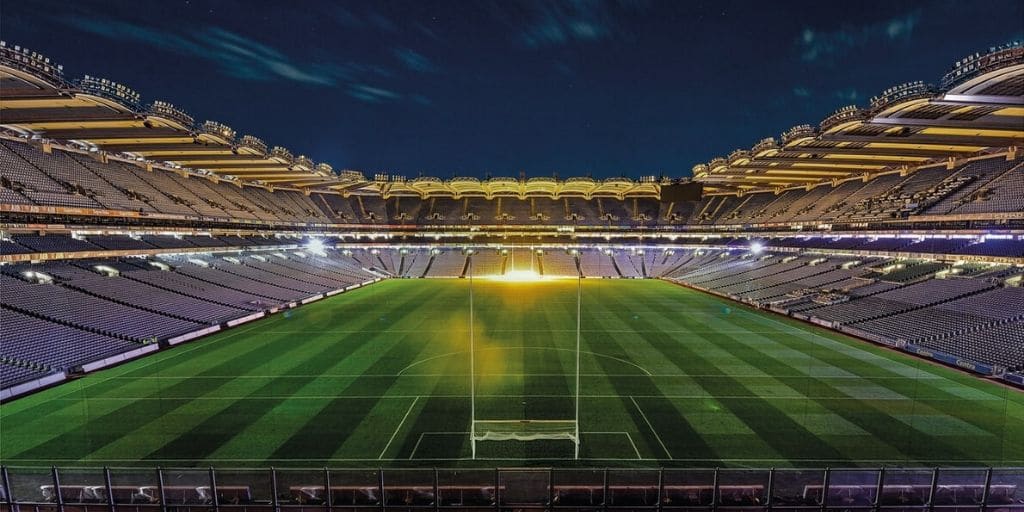
Freeing up Croke Park and other major stadia during the key season for Festivals and Major Concert Tours, remember them, would also give a major financial boost and allow greater flexibility to host the biggest events.
Disasters like the year we have had always create legacies. We have adapted to the circumstances of the virus in ways we could never have imagined.
Perhaps the greatest legacy might be to learn just how much fun there can be in building up the excitement, in getting properly involved in club life and having the pinnacle of our sports as the year draws toward its climax.
Just a thought.
Join us on Monday when we look at another legacy that can leave some good and the need for the Men’s and Women’s games to travel together on the path of season programming.
Sport for Business Partners
[logo_carousel_pro id=”51608″]