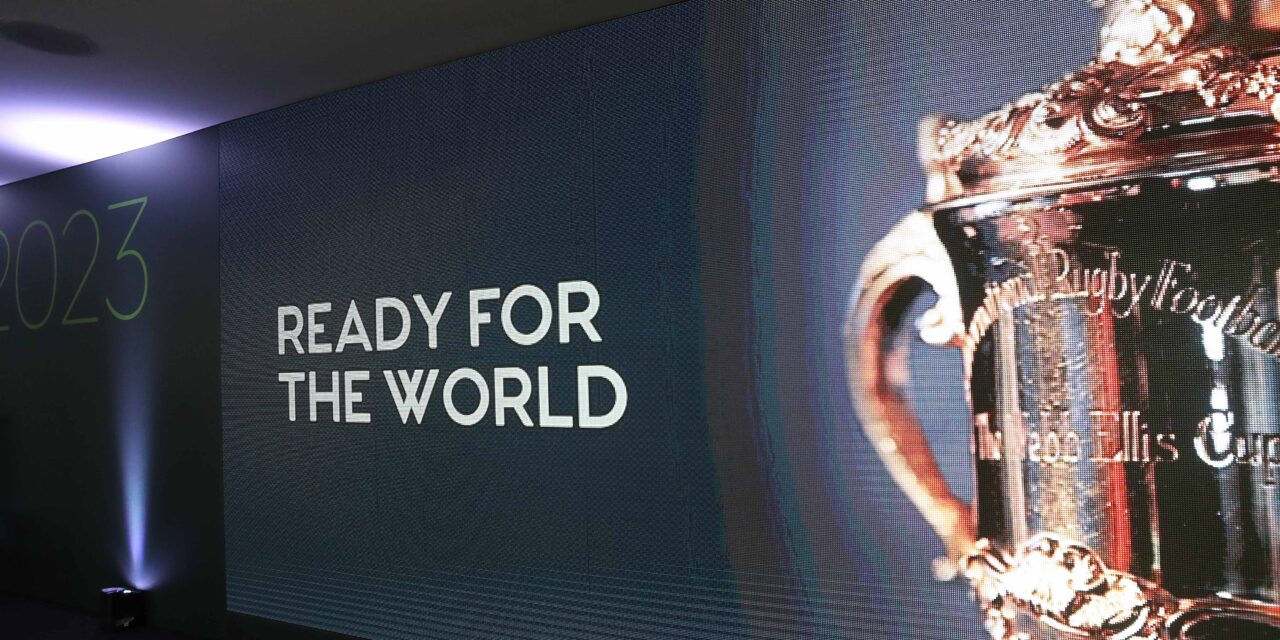
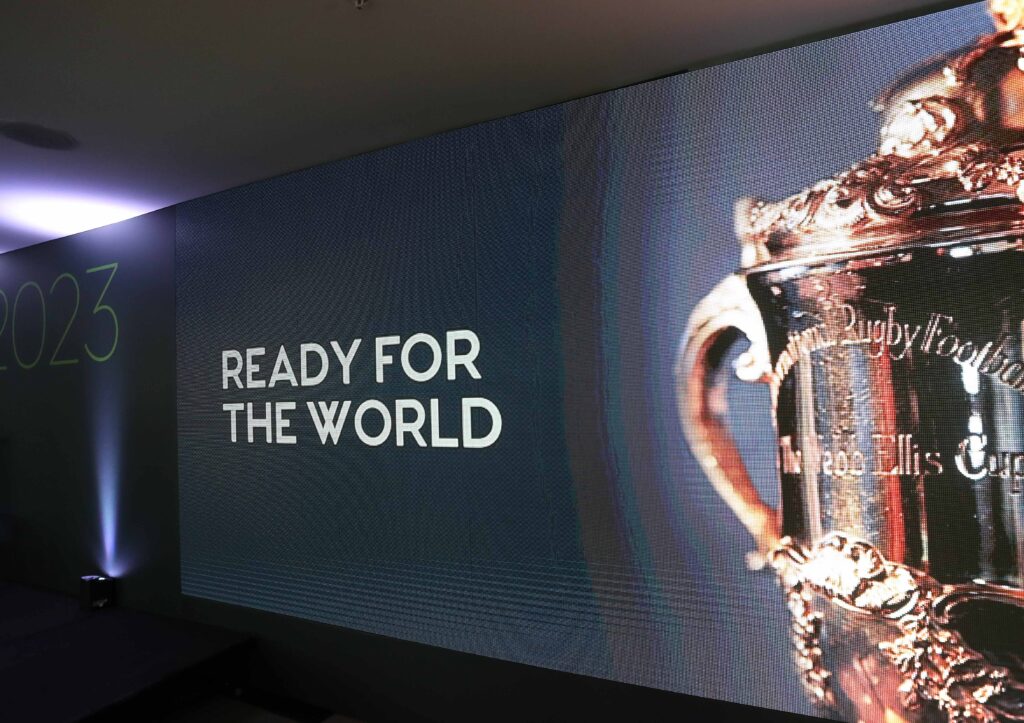
 Later today, World Rugby’s technical assessors will make their recommendation on whether France, Ireland or South Africa is the best country to host the 2023 Rugby World Cup.
The assessors will make a recommendation on which is the best bid and then it’s down to the various national associations – and a great deal of high-level politicking and lobbying – to decide whether the 2023 final will be in Dublin, Paris or Johannesburg.
The Irish government has thrown itself behind the bid with not just Taoiseach Leo Varadkar’s imprimatur, but a large chunk of public money.
This past weekend Sport for Business went head to head in the Sunday Business Post with columnist Ewan MacKenna on the pros and cons of bidding at all. We believe passionately that it is the right thing to do.
Here is the case we argued…
This country has always had a well-tuned ability to travel well in sport, with fans earning plaudits as often as their sporting heroes. Now it has the chance to showcase at home its formidable hosting strengths
Success is based on the balance between the courage to go with what you feel is right and a calculated awareness of the risks involved. It is true in business and it is true in the white heat of decision-making that sport generates at the highest level.
It has been the basis on which the governments of Ireland, North and South, have chosen to back the bid to host the Rugby World Cup in 2023.
From a sporting perspective, Ireland has always had a well-tuned ability to travel well in sport. Our fans win ‘best in class’ awards for behaviour and good spirits as often as the best teams collect silverware. Our teams and athletes perform well for a nation of our size. We have made it to World Cup quarter-finals in football and rugby, our horses and trainers dominate the world of racing to an extraordinary degree, and we revel in the individual achievements of our athletes on tracks, courts and water.
When it comes to hosting, we have always seen ourselves as a global tourism destination. Last year revenues directly attributable to overseas visitors exceeded €8 billion. The number of visitors travelling into the country from overseas hit 8.8 million, a multiple of over 1.8 times our population.
Combining strengths
We do sport well. We do tourism well. The four biggest opportunities to combine those two strengths are the Olympic Games, the FIFA World Cup, the UEFA European Championships and the Rugby World Cup.
Given that the first two are of a size and scale that present major challenges for the biggest of nations to accommodate, it is the latter two that are the ones within any ambitious reach that we may have to make an international statement of our abilities.
In 2020, the Euros are coming to Dublin as part of a distributed hosting across 13 cities. The FAI together with Dublin City Council and the support of government put together a bid document which outscored almost every city in Europe and as a result, we will host four games in Dublin generating millions of revenue and income for the state and the tourism sector.
The Rugby World Cup is a bigger undertaking again but it is manageable.
The major challenge of hosting a global event is the building of infrastructure which may be too specific and too large-scale for accommodation back into a normal cycle after the flags and bunting have been taken down.
That has not been the case with the Rugby World Cup bid. A close working relationship between the IRFU and the GAA, building on the collaboration that came about during the redevelopment of the Aviva Stadium and the opening up of Croke Park, provides benefit well beyond what might otherwise be seen as a single sporting community. Croke Park is the third biggest stadium in Europe and a physical statement of Ireland’s self-confidence. It is down to host the closing stages and the World Cup final, should the bid be successful.
Around the island
Around the island, from the new stadium at Páirc Uí Chaoimh in Cork to the new build of Casement Park in Belfast, the Rugby World Cup bid will benefit from existing investment being made by the GAA to upgrade the facilities which serve their local communities. The Aviva Stadium itself is a world-class venue and will be seen as such on the biggest of stages.
In order to wrest the spotlight of global interest and the tens of thousands of visitors that a Rugby World Cup would attract, there are promises that need to be made. World Rugby derives the bulk of the money it uses to develop and maintain the sport around the world from the staging of the Rugby World Cup every four years.
The fee paid to host in New Zealand was £66 million. That had risen to £80 million for England in 2015 and £96 million for Tokyo in 2019. Ireland’s bid for 2023 will require a minimum fee of £120 million, as well as the absolute support of government to make the tournament work. The Irish government has been steadfast in that level of support and has underwritten the fee as part of the formal bid process.
It has done so for many reasons; as a statement of where we are as a nation, as an investment in an area of sport which delivers tangible as well as intangible benefit for the health and mood of the nation, and as a speculative investment in sports tourism that will yield a far greater financial return for the economy. It has calculated the risk involved and seen the sums add up.
We are not alone in so doing. In South Africa, the independent economic impact assessment insisted on by government before they sanctioned their investment showed that their equivalent 2.7 billion rand underwriting would generate 27.3 billion in direct, indirect and induced economic activity and just short of 40,000 jobs, without the need to build any new stadia.
Solid Basis for Investment
This is not collective myopia induced by a love of a party and of great sport. It is a solid basis for investment which will generate strong and lasting economic return.
That is the economic role of the state, to back enterprise that will deliver jobs and prosperity.
The estimated 450,000 visitors that will travel to support their teams around the island will spend €800 million directly on the Irish economy if we win the bid. That is regardless of any other factors, such as how our own boys in green perform.
In terms of cold hard cash, this bid, should it be successful, will deliver across the Irish economy. It will be a winner in transport, in hotels, in food and drink, across so many areas of the economy. It will be a shot in the arm that benefits the widest community, way beyond just those most closely associated with the sport.
We have the capacity to host the Rugby World Cup, we have the knowledge that it will yield a positive return and we have had the guts to put our hand up and tell the world that Ireland is ready. We await the final decision with confidence.
Rob Hartnett is the founder of Sport for Business, linking business and sport through analysis, publishing and networking.
To read the case against presented by Ewan MacKenna visit the Sunday Business Post where the two sides arguments were first published…
Join us tomorrow morning when we will reflect on what the World Rugby Executive has recommended and what happens next before the final decision in two weeks time.
Sport for Business will host over 20 events with our members in 2018 providing exclusive insight on the relationships that work best for sport and business.
What could we do together for your organisation?
Image Credit: Inpho