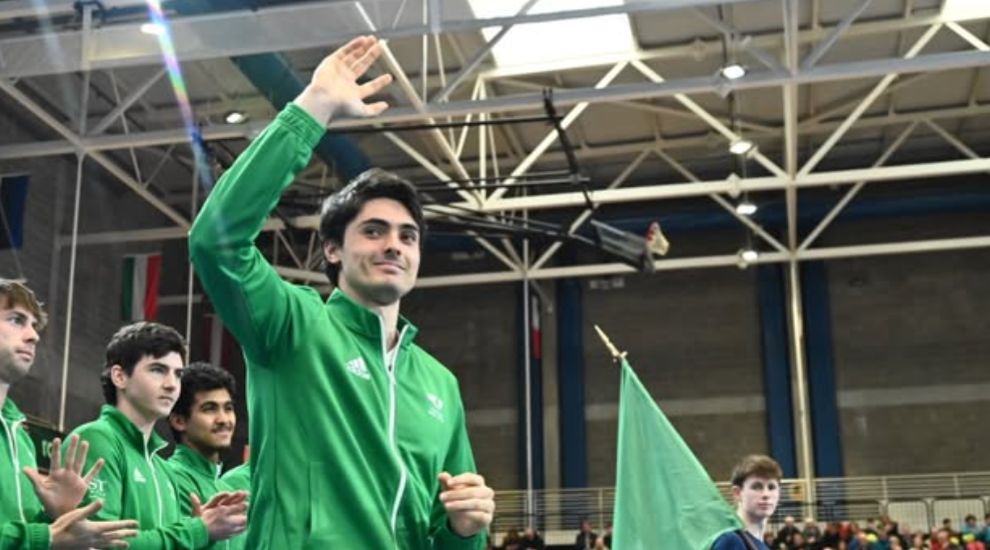
Ireland’s Davis Cup Group II status came to an end in Limerick at the weekend, edged out 3–2 by Syria after a finely balanced tie that ultimately turned on a narrow doubles defeat at the University of Limerick.
With the tie level at 1–1 after Saturday’s singles, Sunday’s opening doubles match was always likely to prove pivotal. Ireland captain Conor Niland opted for youth, pairing debutant Charlie Barry with Conor Gannon, a combination that reflected ambition in the long run as well as to win the match.
Playing in front of a strong home crowd in Barry’s native Limerick, the Irish pair showed no sign of nerves, racing into a 5–0 lead and claiming the opening set 6–1. Syria, however, leaned on experience, fielding their two senior singles players and gradually wrestled momentum back.
A single break of serve in the second set proved decisive as the visitors levelled the match, before a tense deciding set was settled by a tie-break. Ireland had two match points at 5–4 but could not convert, and Syria edged the breaker 7–5 to seize control of the tie.
That result left Ireland needing Michael Agwi to defeat Taym Al Azmeh in the first singles match of the day. Still working his way back from a calf injury that had limited him to just three weeks of training in the past two months, Agwi struggled to find rhythm and fell 6–1, 6–4, sealing the tie for Syria inside an hour.
In the concluding dead rubber, Ammar Elamin provided a positive note, defeating Yacoub Makzoume 6–3, 6–2.
The weekend inevitably reignited wider debate around athlete welfare and readiness, particularly in high-stakes international competition. Agwi’s decision to play, despite limited match fitness, was discussed internally by the Irish camp, with Niland ultimately backing his No.1 to see if he could build confidence on court.
“He’s got the kind of game where, if he gets confident, something can happen,” Niland said afterwards. “Unfortunately, it didn’t.”
Agwi himself offered a candid assessment of both the physical and mental challenge. “It was in my head still,” he said. “The mentality is the most important thing. If I was stronger, I could have done better today.”
Despite relegation, the average age of the five-man squad was just 22.6, underlining a clear emphasis on development. Barry, at 24 and only a year into his professional career, was the oldest member of the team.
The challenge now is to convert that youth, exposure and experience — forged in venues like Limerick and against international opposition — into sustainable progress back up the Davis Cup ladder.
Image Credit: Tennis Ireland
Upcoming Events



SPORT FOR BUSINESS
Sport for Business is Ireland’s leading platform focused on the commercial, strategic and societal impact of sport. It connects decision-makers across governing bodies, clubs, brands, agencies and public institutions through high-quality content, events and insight. Sport for Business explores how sport drives economic value, participation, inclusion and national identity, and how your story can be part of ours.
Through analysis, storytelling and convening the sector, it helps leaders understand trends, share best practice and make better-informed decisions. Its work positions sport not just as entertainment, but as a vital contributor to Ireland’s social and economic fabric.
Find out more about becoming a member today.
Or sign up for our twice-daily bulletins to get a flavour of the material we cover.
Sign up for our News Bulletins here.