When Ireland launched its first International Sports Diplomacy Strategy earlier this year, it marked an important policy development. What was less obvious at the time was how that strategy would move from a Government document into something capable of influencing relationships, attracting investment and strengthening Ireland’s standing on the international stage.
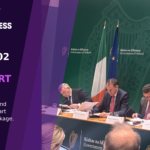
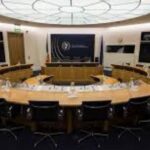
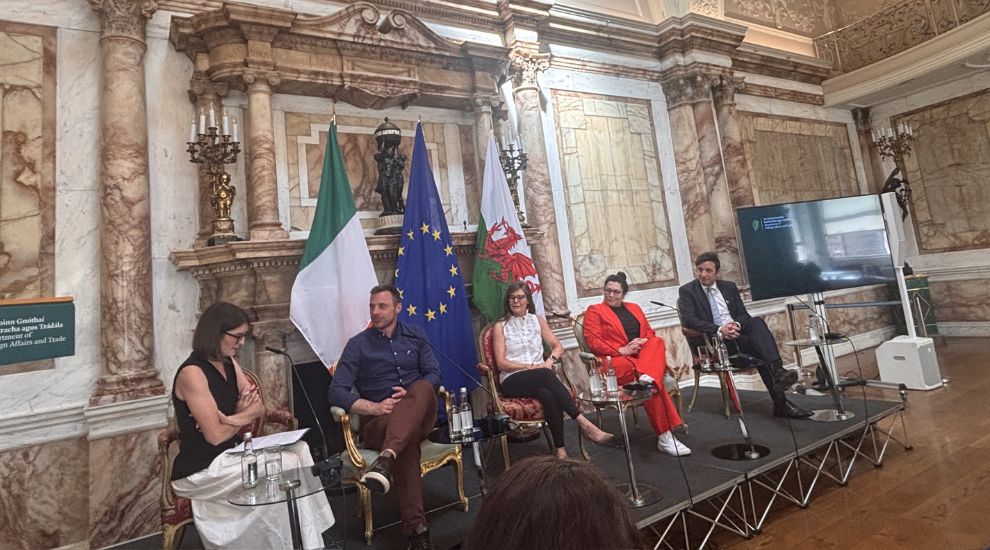
A discussion at Iveagh House yesterday, held as part of the Ireland-Wales Forum, provided perhaps the clearest indication yet of how that ambition is beginning to take shape.
Bringing together political leaders, athletes, sporting administrators and event organisers, the conversation demonstrated that sports diplomacy is no longer viewed simply through the lens of international competition. Instead, it is increasingly being recognised as a means of advancing trade, tourism, education, cultural exchange and international partnerships.
Hosted by Minister for Foreign Affairs and Trade Helen McEntee TD and First Minister of Wales Rhun ap Iorwerth MS, the panel brought together former Ireland international Tommy Bowe, Ryder Cup Senior Programme Manager Linda Hoey, Football Association of Wales Chief Executive Noel Mooney and Wales Netball Chair Dr Helen Williams, under the guidance of host Sinéad O’Carroll.
Each approached the subject from a different perspective, yet there was a common thread running through the discussion: for countries such as Ireland and Wales, sport represents one of the most authentic ways to project national identity and build lasting international relationships.
The strategy itself is built around a simple proposition. Ireland already possesses many of the ingredients needed to strengthen its international profile through sport. Elite athletes, internationally recognised events, a strong sporting diaspora and growing expertise in staging major competitions all exist. The challenge now is to connect those strengths in a more coordinated way.
Minister McEntee described the strategy as being about “connecting the dots” across Government departments, sporting organisations, diplomatic missions and enterprise agencies. Rather than creating new structures, it seeks to align existing ones behind a shared objective: using sport to deepen international relationships while creating benefits at home.
Few countries of Ireland’s size have assembled a pipeline of major sporting events comparable to the one that lies ahead. The Ryder Cup at Adare Manor in 2027, UEFA EURO 2028, and the ICC Men’s T20 Cricket World Cup in 2030 will each place Ireland before global audiences numbering in the hundreds of millions, probably billions. Those events will undoubtedly showcase elite competition, but they also provide an opportunity to tell a broader story about Ireland as a destination for tourism, business, innovation and investment.
Linda Hoey, whose experience spans both Rugby World Cups and the Ryder Cup, illustrated how the planning for modern major events now extends far beyond operational delivery. Success is measured not only by what happens during tournament week but by the economic, community and reputational legacy that follows. Every broadcast image, every visitor experience and every international business engagement becomes part of how a country presents itself to the world.
That wider understanding of sport also underpinned the Welsh contribution.
First Minister Rhun ap Iorwerth spoke of the role sport has played in projecting Wales as a confident, outward-looking nation, pointing to major football tournaments as moments that strengthened national identity while opening conversations about culture, tourism and investment. For smaller nations, visibility matters. Sport provides a platform capable of reaching audiences that traditional diplomacy rarely can.
Tommy Bowe brought the discussion to a more personal level. Drawing on his experiences representing Ireland, Ulster, Ospreys, and the British & Irish Lions, he reflected on how athletes often become ambassadors without ever being formally asked to do so. Shared experiences, friendships between players and the emotional connections that supporters develop with teams create relationships that frequently outlast the matches themselves. Those connections become valuable currency when nations seek to build partnerships overseas.
Noel Mooney offered the perspective of a governing body navigating an increasingly complex international landscape. Football organisations are now expected to respond to issues that extend well beyond the game itself, balancing questions of human rights, inclusion and political sensitivity while remaining true to the values of sport. His contribution reinforced the idea that sports diplomacy is not about avoiding difficult conversations but about approaching them with consistency, clarity, and an understanding of the role sport can play in reflecting national values.
Dr Helen Williams broadened the discussion further still. Her focus on women’s sport, participation and community programmes served as a reminder that diplomacy begins long before elite athletes walk into an opening ceremony. Grassroots sport creates opportunities for leadership, education, health and social inclusion that resonate internationally every bit as much as success on the field of play. The examples she shared demonstrated how investment in sport can also become investment in stronger communities and greater equality.
Taken together, the discussion indicated that Ireland’s Sports Diplomacy Strategy is not really about sport in isolation. It is about recognising sport as part of a wider national ecosystem.
For decades, Ireland has successfully projected itself internationally through its literature, music, culture and diaspora. Sport is now assuming a place alongside those traditional strengths, supported by an unprecedented calendar of major events and an increasingly sophisticated sporting sector.
That shift matters because it creates opportunities well beyond the government.
National governing bodies become international ambassadors for their sports and for Ireland. Universities strengthen research collaborations through sport. Event organisers become drivers of tourism and inward investment. Athletes become trusted advocates for Irish values and innovation. Businesses increasingly find that their investment in sponsorship and partnerships contributes not only to marketing objectives but also to the international reputation of the country itself.
For organisations operating within Irish sport, this represents a significant change in perspective and a great opportunity
The discussion at Iveagh House suggested there is genuine alignment behind that ambition. Government, governing bodies, athletes, and commercial partners appear increasingly to recognise that Ireland’s reputation can be strengthened through sport in ways that benefit far more than just the sporting sector.
The opportunity over the next five years is considerable. The challenge will be maintaining the collaboration needed to turn a well-crafted strategy into lasting international influence.
 Ryder Cup Europe and the Department of Culture, Communications and Sport are full members of Sport for Business.
If you would like to be part of the Sport for Business community and see your organisation in our content, on our stages, and in the conversation happening every day around the commercial world of Irish Sport, email us today and let’s see what is possible.
Image Credit: Sport for Business.
ABOUT SPORT FOR BUSINESS
Sport for Business is Ireland’s leading platform focused on the commercial, strategic and societal impact of sport. It connects decision-makers across governing bodies, clubs, brands, agencies, and public institutions through high-quality content, events, and insights.
Sport for Business explores how sport drives economic value, participation, inclusion and national identity, and how your story can be part of ours.
Through analysis, storytelling and convening the sector, it helps leaders understand trends, share best practices, and make better-informed decisions. It positions sport not just as entertainment but as a vital contributor to Ireland’s social and economic fabric.
Find out more about becoming a member today.
Or sign up for our twice-daily bulletins to get a flavour of the material we cover.
Sign up for our News Bulletins here.