The ongoing inability of sports supporters in Northern Ireland to access some RTÉ and other Irish broadcasts should be raised directly with the British Government as pressure increases for a permanent solution to sports geo-blocking.
Minister for Culture, Communications and Sport Patrick O’Donovan has confirmed that he has sought a meeting with his British counterpart over the issue, which has repeatedly prevented viewers north of the border from accessing major sporting events involving Irish athletes and teams.
Sinn Féin TD Aengus Ó Snodaigh raised the issue with the Minister during an Oireachtas committee meeting this week.
O’Donovan described the situation as a major source of frustration, highlighting its impact around both Olympic sport and Gaelic games.
He has requested a meeting with UK Culture Secretary Lisa Nandy on several occasions and said he intends to escalate the matter in the coming weeks.
The Minister said the issue is not a devolved responsibility and therefore needs to be addressed at Westminster level.
He also linked access to broadcasting to the Good Friday Agreement and argued that viewers both in Northern Ireland and in border communities can become unintended victims of geo-blocking arrangements.
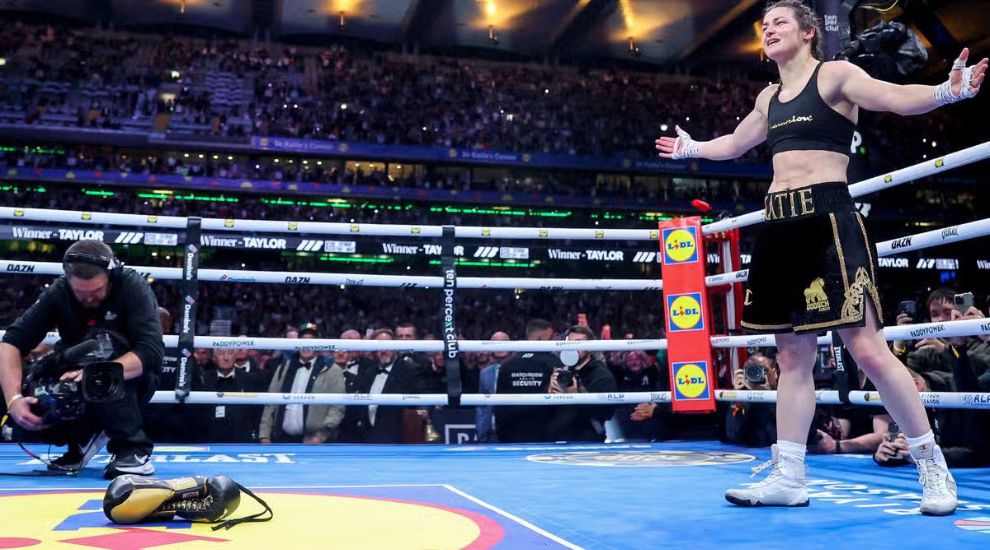
The issue returned to prominence earlier this month when viewers in Northern Ireland could not access RTÉ’s coverage of Katie Taylor’s farewell fight at Croke Park.
There have also been previous difficulties around RTÉ’s Olympic coverage, including access to news reports containing Olympic footage.
Ó Snodaigh has indicated that he will also raise the issue through the British-Irish Parliamentary Assembly, with the ambition of finding a solution well in advance of the Los Angeles Olympic Games in 2028.
Sport for Business Perspective
Gaelic games, rugby, boxing, athletics and Olympic sport are among the many that draw audiences, participants and commercial partners from both sides of the border.
Broadcasters and rights holders are increasingly distributing sport digitally, but the difficulty here is that geo-blocking is not simply a switch RTÉ or another broadcaster can turn off.
Sports rights are sold territorially. An Irish broadcaster may hold the rights for the Republic while another organisation owns the equivalent UK rights, making the Northern Ireland audience subject to a different contractual arrangement. For example, Premier Sports has the rights to show a 3 pm kick-off in the English Premier League, but those games are restricted from being broadcast live in the UK.
A single technical fix is unlikely to cover every sporting property because every rights agreement is different.
What could be developed is a framework recognising the particular circumstances of broadcasting on the island of Ireland and encouraging rights holders and broadcasters to address Northern Ireland access when negotiating future contracts.
The Los Angeles 2028 approach provides an obvious deadline.
It would be difficult to explain to families in Northern Ireland why they can travel as part of Team Ireland, watch a relative compete under the Irish flag in Los Angeles, but potentially be unable to access the same Irish broadcast as viewers a few kilometres away across the border.
 RTÉ and the Department of Culture, Communications and Sport are full members of Sport for Business.
If you would like to be part of the Sport for Business community and see your organisation in our content, on our stages, and in the conversation happening every day around the commercial world of Irish Sport, email us today and let’s see what is possible.
Image Credit: RTÉ
ABOUT SPORT FOR BUSINESS
Sport for Business is Ireland’s leading platform focused on the commercial, strategic and societal impact of sport. It connects decision-makers across governing bodies, clubs, brands, agencies, and public institutions through high-quality content, events, and insights.
Sport for Business explores how sport drives economic value, participation, inclusion and national identity, and how your story can be part of ours.
Through analysis, storytelling and convening the sector, it helps leaders understand trends, share best practices, and make better-informed decisions. It positions sport not just as entertainment but as a vital contributor to Ireland’s social and economic fabric.
Find out more about becoming a member today.
Or sign up for our Daily Sport for Business Snapshot email bulletins to get a flavour of the material we cover.
Sign up for our News Bulletins here.