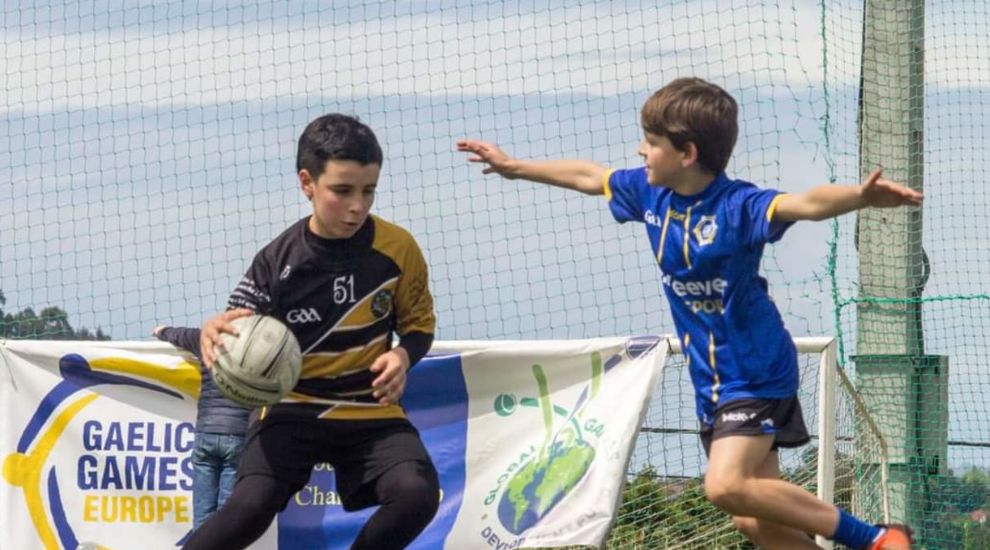

An important new survey exploring participation, development and retention in youth Gaelic games — particularly among players aged 13 to 17 — has been launched, with organisers urging coaches, players, administrators and volunteers to have their say.
The research will examine whether a more formalised adapted games programme could improve player retention, enhance skill development and help smaller clubs continue to field teams amid shifting demographics.
Headed up by Dr Michael McKay, the research will combine survey data with interviews involving county and provincial coaching and games development staff, as well as focus groups with coaches and parents. All responses to the public survey will be anonymous and treated confidentially.
At the heart of the study is the potential adaptation of traditional formats, particularly reducing team numbers and pitch size in youth competitions. While 15-a-side remains the standard, there is growing interest in smaller-sided models.
“We’re going to play four games of U-14 and U-16 hurling and football where the number of players and the size of the pitches will be modified,” Dr McKay told GAA.ie.
“We will record it and analyse the key performance indicators just to see the extent to which smaller sided games give players more opportunities and more touches.”
Those pilot games will take place at the National Games Development Centre on March 21st, with formats potentially ranging from traditional 15-a-side down to seven-a-side on suitably adapted pitches.
The move reflects practical challenges facing clubs nationwide. In Longford, the Paul Barden U13 Skill School Programme — which culminates in a seven-a-side blitz — has delivered strong outcomes in terms of skill development and engagement.
Damien Sheridan, Head of Games with Longford GAA, says demographic pressures are now a major issue at U14 level.
“We have eight clubs who need to play an 11-a-side at under 14 this year so we’re going to have an 11-a-side division where the pitch will be reduced but we’ll still be using full-size goals,” he said. “Adapted games can be adapted in many different ways to suit what a given need is, and our current need is to keep clubs alive and fielding with their own jersey.”
Conversely, some urban clubs face the opposite problem — too many players rather than too few.
“For some clubs with massive numbers of players they could have a panel of 27 players but that means on any given day 12 of them aren’t playing,” added Dr McKay. “So how about if instead of playing one match of 15-a-side we instead played three matches of nine-a-side?”
Connacht has already experimented successfully with seven-a-side formats at U14 academy level, while Longford’s participation in a seven-a-side blitz with Louth and Carlow last year highlighted the benefits of increased touches, faster decision-making and greater inclusivity.
The research team — which also includes Dr Paul Donnelly (Ulster University), Dr Richard Bowles (Mary Immaculate College) and Dr Peter Horgan (GAA) — hopes to gather broad input over the next fortnight.
“We’re trying to come up with potential solutions on a number of levels — demographics, retention of players in the game, making people of all abilities feel valued, and skill development,” Dr McKay said.
Parents of 13 to 17-year-olds are particularly encouraged to support participation, as Gaelic games examines how best to evolve youth structures to meet the needs of a changing Ireland.
The Survey is Available to complete here.
Coaches, Players, Parents of players aged 13 – 18, the GAA in partnership with Ulster University and Mary Immaculate College wants to hear from you. Click on the link below to have your say on the future of Youth Gaelic games. 🗣️https://t.co/HhH7JaWBUc pic.twitter.com/gDHYI5bPWI
— The GAA (@officialgaa) February 18, 2026
Image Credit: GAA
Upcoming Events



SPORT FOR BUSINESS
Sport for Business is Ireland’s leading platform focused on the commercial, strategic and societal impact of sport. It connects decision-makers across governing bodies, clubs, brands, agencies and public institutions through high-quality content, events and insight. Sport for Business explores how sport drives economic value, participation, inclusion and national identity, and how your story can be part of ours.
Through analysis, storytelling and convening the sector, it helps leaders understand trends, share best practice and make better-informed decisions. Its work positions sport not just as entertainment, but as a vital contributor to Ireland’s social and economic fabric.
Find out more about becoming a member today.
Or sign up for our twice-daily bulletins to get a flavour of the material we cover.
Sign up for our News Bulletins here.