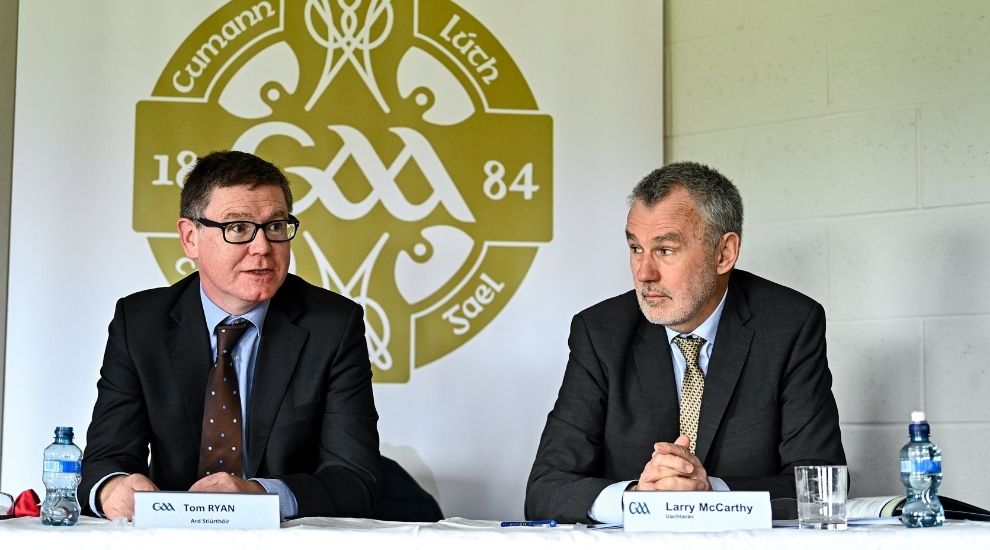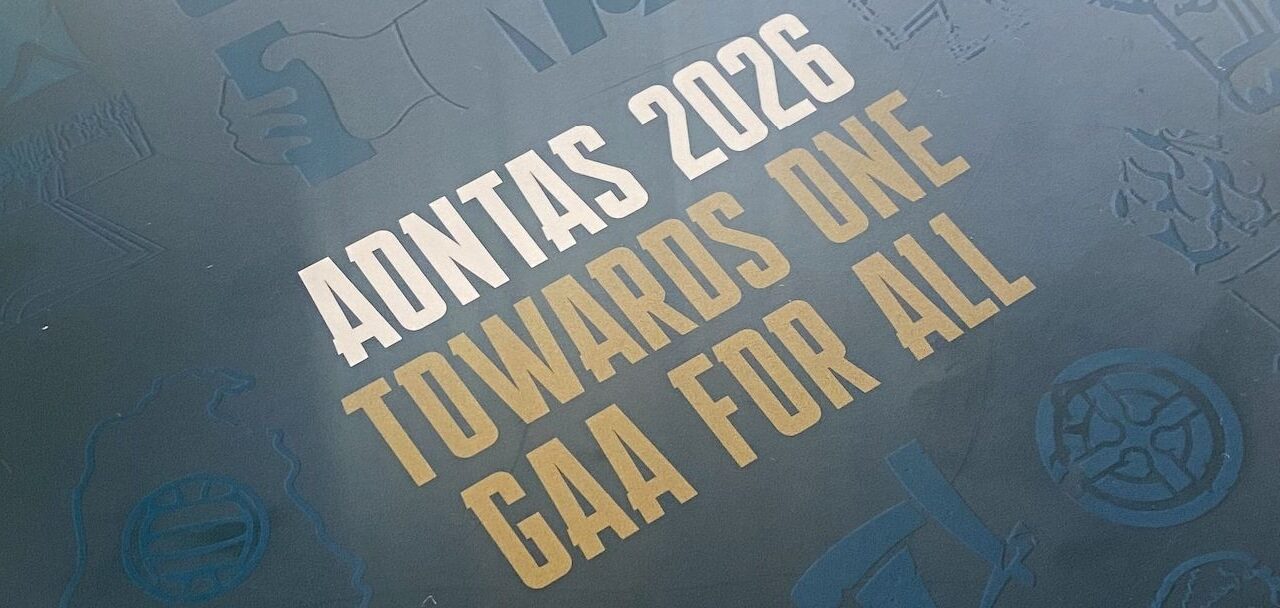
The GAA’s new Strategic Plan published in Termonfeckin yesterday covers an extended five year period and has sustainability and integration at its core.
‘Aontas 2026 – Towards One GAA for All’ is a substantial document, framed by the widest ever consultation of GAA members and coming off the back of a shock to the system that had not previously been experienced.
In those ways alone it is an important document worthy of close study and demanding a detailed implementation plan to bring as many of its ambitions to life as possible.
It goes back to basics outlining the six key values of the Association being those of community identity, amateur status, respect, inclusiveness, player welfare and teamwork and volunteerism.
Restating those core principles can never be done enough, particularly when the heads down demands of organising as many games and competitions as there are will always demand time and energy.
Indeed even yesterday as the conversation steered towards the longer term, there were still questions asked of the here and now, on player expenses and details that are ‘in the rushes’.
This document took time to pull together and distil into six key priorities. We will do it the service of giving it time to analyse over the coming days, taking each of the priorities and looking at what they mean and how the authors wish to advance them.
The six priorities to be advanced between now and 2026 are:
1. Maximum participation among players, coaches, referees and officers
2. A sustainable Association with thriving Clubs at its core
3. Six codes, one Association
4. A connected and inclusive Association
5. Good governance among GAA units
6. Sustainable financial models and facilities
The discussion of the moment is the amalgamation or coming together of the GAA, LGFA and Camogie Association to create one governing body.
President Larry McCarthy and Ard Stiuthoir Tom Ryan are under no illusion that this will be done with the wave of a magic wand.
“This is something for which there is broad general support with each association passing motions of support and 81 per cent of those we surveyed being supportive,” said McCarthy speaking after the event.
At the club level, it is already part of the way that things have been heading over a number of years under the one club model. At National level we can create memoranda of understanding that outline the principles of equality. It may though be in the tiers in between, at provincial and county board level that the greatest challenges will be faced.”
“But that is what we set ourselves collectively the task of doing.”
“The importance of our clubs to the communities they serve was never more evident than it was during the harrowing Pandemic,” he added.
“If the GAA is about People then it is appropriate that we have a strategic plan that delivers for everyone and after this detailed consultation process, I believe we have a strategic plan to allow Gaelic games to face the future with confidence.”
“The significant level of engagement from every level of the Association that was used in preparing this plan had direct input into the final document and helped shape our vision for the coming years,” added Ryan.
“Ensuring that Gaelic games are robust for whatever challenges are ahead and are capable of staying relevant to our members and clubs will be our priority.”
We asked both the leaders what their personal sense of priority was on what would emerge.
Respect was at the core of how McCarthy sees the next two years of his Presidency and then into the future.
Ryan paused a moment before answering that the creation of sustainable advances in how the Association organises its games, manages its people and contributes to the world around it would be central to how sees success.
To make advances in both those areas alone would be a powerful testament to what was published in this document, and a powerful bedrock for what will follow.
To do so as a single association where players of all codes are valued equally would be something to be proud of.
The survey undertaken through the new Foireann management system generated 15,300 responses giving it a size and scale that is very representative.
This was backed up by focus groups and written submissions that painted a strong picture on where the Gaelic Games family is in 2022 and where it might head with purpose towards 2026.
Now a Strategic Plan Implementation Committee, chaired by the Uachtarán, will oversee the implementation of the plan. This committee will also include the Ard-Stiúrthóir and four Provincial Secretaries / CEOs. They will meet on a regular basis to review progress before a mid-point review takes place ahead of February 2024 when the next Uachtarán starts his role. This review will allow the new President to refresh the specific actions to be taken.
Tomorrow we will take a look in detail at the first priority – the maximum participation of players, coaches, referees and officers.