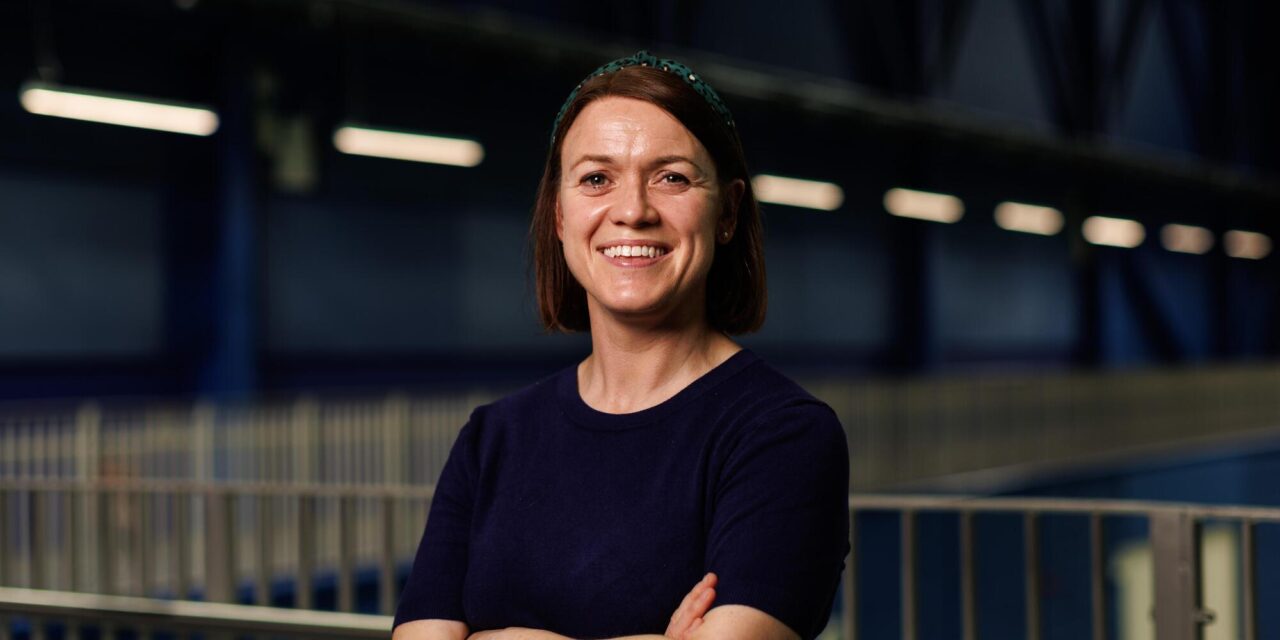
Ahead of the release of the IRFU’s Women’s Rugby Strategy, Lynne Cantwell, Head of Women’s Strategy, outlined the organisation’s plans for transforming the women’s game in Ireland.
From grassroots participation to high-performance goals, and from community impact to commercial ambition, Cantwell shared her insights from her first six months in the role.
SFB: Lynne, you’ve just passed six months in a new role with the IRFU. How would you summarise your experience so far?
LC: It’s been intense and exciting. The role began in January and is part of a broader IRFU strategy launched in 2024, where the women’s game was rightly named as one of the four key priorities. My focus has been on working closely with directors and provincial leaders to shape the five strategic pillars – defining what success looks like and what is realistically achievable.
It’s a growth story. Some areas are starting almost from scratch, and that’s okay – what matters is having transparency about where we are and a commitment to build from there. The level of engagement and leadership buy-in, especially from Kevin Potts, has been hugely encouraging.
SFB: Frustration has been voiced regarding the Women’s AIL and its place in the performance pathway. What’s your view on that?
LC: I understand those frustrations entirely. The performance and domestic sides of the game need to be more aligned, and that’s what we’re working on. The calendar is still evolving – international, regional, and now age-grade competitions like the U20’s are constantly shifting. That impacts everything below.
For the short term, the plan is to maintain stability in 2025 and 2026, allowing us sufficient time to redesign the domestic structure properly. We’re already in conversations with clubs, trying to be transparent about fixture clashes, especially with events like the Six Nations.
The idea is to support both growth and sustainability, allowing the domestic game to thrive alongside performance pathways.
Q: What’s your take on Irish players like Aoife Wafer heading to play in the UK?
Delighted for Aoife. While it’s true that we want our top talent to play in Irish competitions eventually, we’re not there yet. She’ll return with invaluable experience and a new standard to bring home. Long-term, we want the Celtic Challenge to be that aspirational platform, but players going abroad for now makes sense while we’re still building.
Q: The Women’s Rugby World Cup in 2025 is just around the corner. How are you balancing the momentum of that with long-term development?
LC: The World Cup is going to be huge – record-breaking. And it’s on our doorstep, which is a golden opportunity. But our strategy is long-term. We’re looking to 2033, across two World Cup cycles. We want young players today to feel confident there’s a plan and a future.
What we’re also seeing is the women’s game flourishing in non-traditional areas like Wicklow, Ballincollig, and Barnhall – different to where the men’s game is rooted. That’s changing the identity of Irish rugby, and it’s something we’re embracing.
SGB: Will there be visibility campaigns and legacy projects around the World Cup?
LC: Yes, lots. But beyond visibility, it’s about sustainability. We want more girls picking up rugby balls and having a great experience in inclusive, well-supported environments. That means better facilities, coaching, and more volunteers.
We’re looking at a legacy model similar to what the Matildas did in Australia. The goal is to elevate the ongoing strategy using the World Cup as a launchpad – whether that’s in diversity and inclusion, like the amazing work Anne Marie Hughes is doing, or in connecting more with communities.
SFB: Let’s talk money. The current revenue gap is stark – €2m in income, €9m in spending. How will that be closed?
LC: The investment is significant, and growing. The €2m in sponsorship is a great starting point. But yes, we need to build a commercial and marketing portfolio that makes sense to brands. A lot of it comes down to data and storytelling – showing sponsors where the game is headed and why it’s a great investment.
We’re still early in that journey, but we’ve begun a coordinated effort across the provinces to understand our market better – who our fans are, what they care about, and how we can deliver compelling, family-friendly rugby experiences.
SFB: How do you think rugby compares with GAA and soccer in terms of women’s sport development?
LC: All three sports are learning from each other. Soccer is a bit further along – Katie McCabe is where Brian O’Driscoll was 20 years ago in terms of national influence. The GAA’s community roots and volunteer culture are extraordinary. Rugby is younger, especially for women, and we need to learn from those models while understanding we’re different.
We have a long way to go in schools and community participation. Just 10% of rugby clubs currently have a full girls’ pathway. We want that to change drastically by 2028.
SFB: The leadership gap at club level is striking – just 15% female representation. How can the IRFU influence change there?
LC: It’s a concern, absolutely. The 40% representation at union level is important, but we need that culture to filter down. Through leadership programs – 130+ women have completed them already – and by promoting visibility and pathways, we hope to encourage more women to take up roles in club governance.
But clubs need support. We need to normalise having women in these spaces and value the impact of diverse thinking on decision-making.
Q: Finally, what about high-performance? When might we get to four full-time contracted teams?
LC: We’re aiming for the 2026–27 season to take that first major step, though it won’t be bells and whistles straight away. Think daily training environments with full-time coaches and proper support systems. The PWR started in 2017 and it’s still evolving.
We’ll get there, but we need to do it sustainably and responsibly – ensuring the pipeline and domestic game are strong enough to support that kind of leap.
You can read about and download the full strategy here.
Sport for Business Events

Find out More about Our Sport for Business Events Programme Here
The Latest Sport for Business Podcasts
Further Reading for Sport for Business members:
Check out more of our Sport for Business coverage of Rugby
WHAT’S UP NEXT?
Sport for Business is in planning for major events bringing together leaders in Irish Sport and Business across a range of subjects in the second half of the year.
On Thursday, August 29th we will host a special event looking at Future Proofing Irish Sport including the use of AI in sport.
Find out More about Our Sport for Business Events Programme Here
MEMBERSHIP AND EVENTS
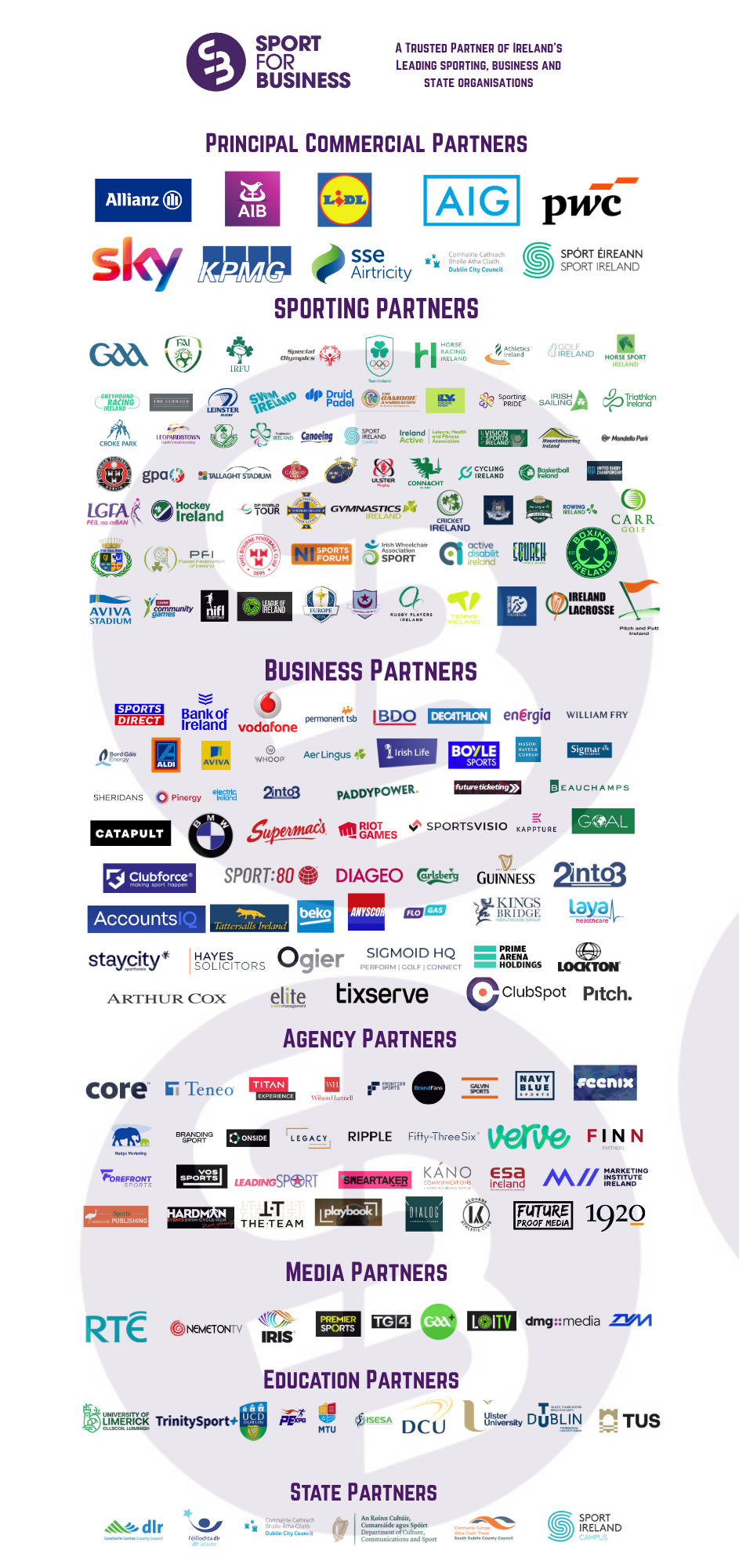
The IRFU as well as all the leading sporting and business organisations in and around the world of sport are among the 300+ members of the Sport for Business community.
This includes all of the leading sports and sponsors, as well as commercial and state agencies, individuals interested in our world, and an increasing number from beyond these shores taking a keen interest in Ireland.
Find out more about becoming a member today.
Get the full benefit of a Sport for Business membership by joining us at one of our upcoming events, where sporting and business leadership come together.
Or sign up for our twice-daily bulletins to get a flavour of the material we cover.
Sign up for our News Bulletins here.