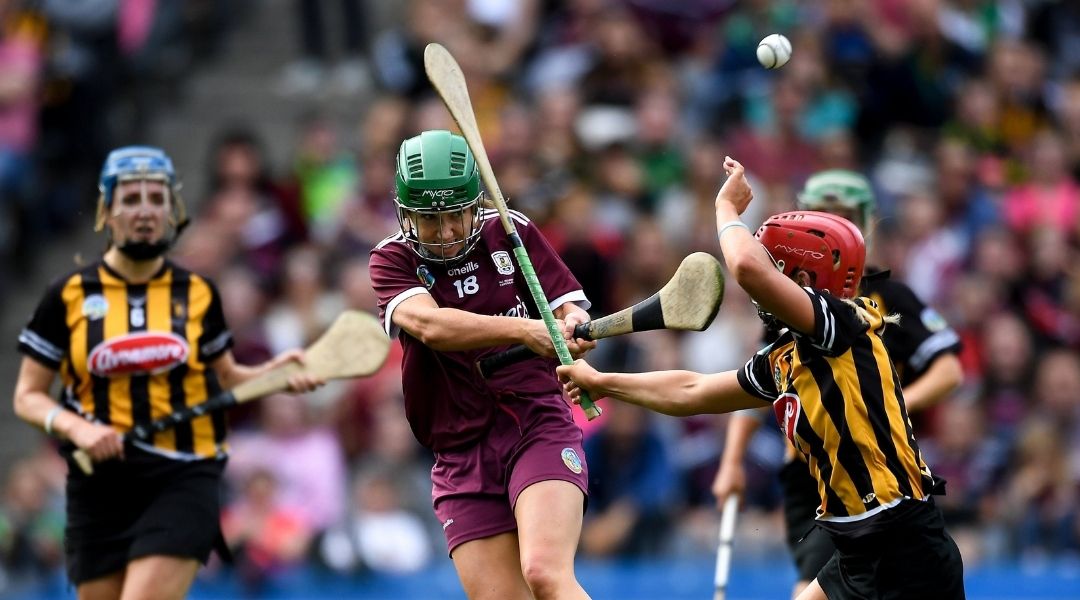
Democracy is great but when things are on a knife-edge it can present its problems as well. The Camogie Association published the result of its poll of clubs yesterday which overturns an original decision to favour Club Championships in the Summer and will now mean that a split season will be in place across all four codes of Gaelic Games.
It will enable the Littlewoods National Leagues to get underway this weekend without the threat of a withdrawal by players and will see the Championship played out over July and August, in synchronicity with the TG4 All Ireland Ladies Football Championship. It will be a short enough window in which to avoid any clashes for counties that have dual players going deep into the knock out stages but the two organisations have worked better together on finding solutions where possible for that in recent years.
Dual players in the men’s game are a rarity at Inter-County level these days and while the number is small in the Women’s games as well, it was perhaps the impact on the Club Championship of losing players to one or other County set up over an extended period that may have swung the vote.
In that sense, while the concept of having the 98 per cent of club players in meaningful Championship action mid-summer as opposed to the two per cent at County level, maintained a strong attraction, it would only work if both codes were aligned.
The final split of the vote was 53 per cent in favour of County the Club, as opposed to 47 per cent who voted for Club in the middle. The close nature was not a surprise. We spoke to four clubs who held meetings with players over the weekend to get their views and they were equally split and equally adamant that they were voting for the best solution.
Fault Lines
What we have now is a sport where fault lines have become visible between those who are Camogie led and those, perhaps in more urban areas, where the ethos of a dual club is more to the fore.
That will be a challenge for new President Hilda Breslin and CEO Sinéad McNulty to heal over the coming months. The fact that the vote was so close makes it even more difficult as the idea of a mandate is less solid when just under half have opposed it.
The key element in psephology or the study of elections and opinion polls is the intended vote of a ‘don’t know’s’. That matters here because the proportion of clubs that cast a vote was 62 per cent. This leaves a big gap in the ‘hearts and minds’ calculations of whether this is a long term strategy or a short term necessity for the sport.
In a statement outlining the result, the Camogie Association outlined its next steps as being “to detail the fixtures structure, collaborate with our colleagues in the GPA in relation to the feedback from our clubs, and work with broadcast partners to try and ensure maximum coverage possible for all of our Camogie on 2021.”
The fixtures will be controllable.
The GPA relationship will be helped by its reaction “thanking the Camogie Association for taking the time to pause and reflect on the fixtures schedule and for their constructive engagement with us in the last ten days.”
The broadcast element will be trickier now with the Championship going toe to toe with RTÉ’s commitments to the GAA Hurling and Football Championships and, now in the summer window, the Olympic and Paralympic Games in Tokyo. In a 168 hour week, there is only so much time that can be devoted to live sport.
Generally speaking what is best for the sport and best for the players is closely aligned. In some case that might not be wholly true. The job at hand now will be to make the most of a decision that was certainly the least combative in the short term, but which is not without problems for where the sport may be in the eyes of the viewing public and as much as half of its membership when the dust has settled by the end of the year.
This was not a problem of its making, but it is one that still has a way to go before being resolved.
The Camogie Association is one of 30 National Governing Bodies of Sport among more than 250+ members of the Sport for Business network of sporting and business organisations working together across a number of key areas.
Sport for Business Partners
[logocarousel id=”56327″]