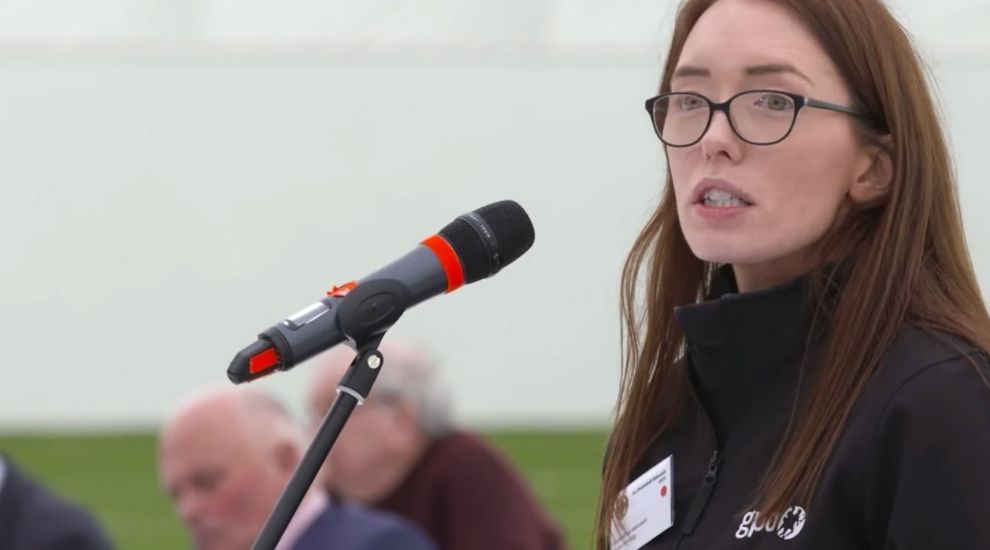
The motion that the outside world was watching most closely at the GAA Annual Congress on Saturday was that urging a priority commitment to integration between the GAA which governs men’s Gaelic games, the Ladies Gaelic Football Association and the Camogie Association.
There was no drama, with every speaker given time from the floor in the debate speaking in favour and the motion being passed by an overwhelming majority of 89.8 per cent in favour.
The passing of the motion does not result in any particular rule change but rather directs the Management Committee to prioritise integration.
It has never been off the agenda but now it will of necessity be given greater prominence. It was the overwhelming wish of the players at the inter-county level and now it will go to different motions of a similar hue that will be put to the LGFA and Camogie Congresses.
The interest now in those is in whether there will be voices raised about the perceived unease in certain quarters that a merger of the three will result in a loss of control over their own destiny.
Each of the three associations sets its own rules and runs its own affairs through three separate county boards in every county and four separate provincial structures across each sport.
All are run on a mainly voluntary basis and all have been in some way as a reward for a lifetime of service to the sport in question.
Fitting all of that recognition into a single county board governing the whole remit of Gaelic games makes absolute sense from a sporting and societal perspective but will require many people who have given a life of service to their sport having to step away from the decision making process.
One can only imagine that was the reason behind 10.2 per cent of the GAA delegates in Mayo voting No to greater integration and it is not beyond the bounds of possibility that the number will be higher when it comes to the floor of the Camogie and Ladies Football decision making gatherings.
At club level up and down the country, the idea of ‘one club’ has largely been accepted and integration at a grassroots level is further advanced than many would imagine reading the headlines.
There will always be tension over pitch allocations and training times slots but for the most part, clubs have been able to work it out on the basis that most of the players and the decision-makers were coming from families where there were feet in every camp.
The national and county bodies need to look to the ways in which clubs have managed this effective integration to see that it can work and that it is the best way forward.
They will also look to other sporting bodies to see just how an organisational coming together can be achieved. The Men’s side has ownership of most of the playing facilities and must recognise that this is what will go into a shared body. The Women’s side will justifiably be proud of the tradition and the more recent success of their competitions and the commercial demand that there is to be associated.
They can remain as separately negotiated competitions when it comes to sponsorship, broadcast and promotion rights. Being part though of a single approach will have benefits.
Golf Ireland has shown in recent years that the integration of two separate governing bodies, united by the use of the same facility and separated only by gender and history can be brought together successfully.
It will not happen overnight.
There are many conversations and many areas of comfort that will have to be covered, and no doubt there will be occasional missteps but so long as the eyes remain on the ultimate prize of a sporting set-up that is based on the merit of a well-organised playing of sport regardless of the gender of the player, then it will happen.
It will also be part of the agenda for our annual Women in Sport Conference taking place on April 28th, for which you can pre-register below if this is an area that is of interest to you.