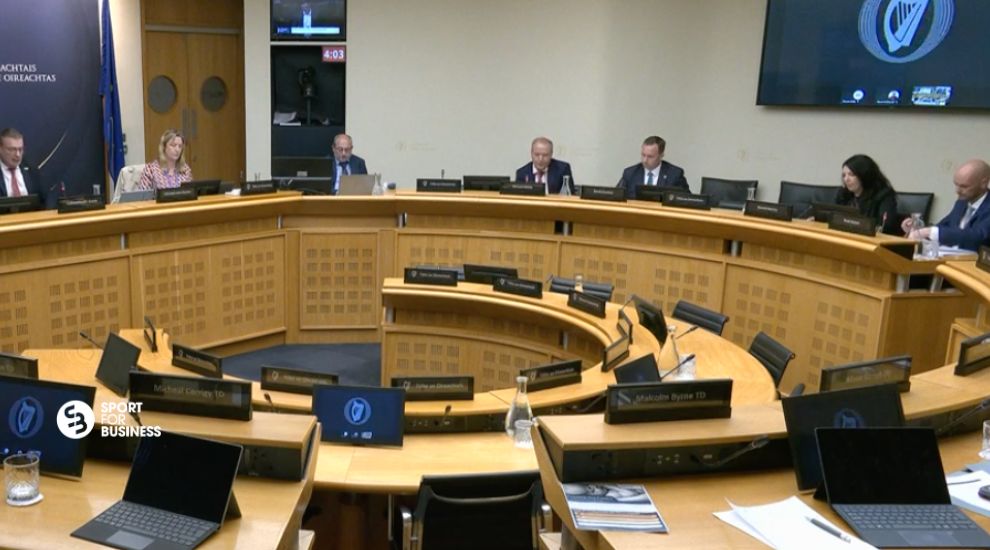
GAA+ and LOITV appeared before the Oireachtas Committee on Tourism, Culture, Arts, Sport and Media last night to give evidence during the pre-legislative scrutiny of the revised General Scheme of the Broadcasting Amendment Bill.
The potential impact of a levy on their services was part of the discussion, as was the sustainability of the models that both are using to increase visibility and generate revenue, the threat of piracy and more.
Representing GAA+, Noel Quinn, Head of GAA Marketing and Media Rights, outlined how the service, now a wholly owned and operated platform, generated €5.5 million in 2024 and how the GAA as a whole repurposes 82% of its commercial income back into grassroots initiatives, including capital infrastructure, coaching, participation, and player welfare.
A number of TDs and Senators pressed for the deal to buy out RTÉ from the original joint venture in GAAGO, and an undertaking was made to provide these figures, which would come into the public domain anyway through the audited accounts of both bodies.
Quinn stressed that it was a GAA approach, part of a strategy to control their future in the world of rights and data that was behind the move.
He highlighted that piracy could be responsible for up to 40% in lost revenue, calling it “essentially dipping into the GAA’s pocket” and impeding its ability to invest in coaching, pitch upgrades and community programmes.
He also reiterated the GAA’s support for independent production companies, citing collaborations with Nemeton TV, Loose Horse and Crossing the Line, and said that a 25% quota on public funding for independent productions could unlock “greater diversity of thought, voice and storytelling about our games.”
The GAA also called for any proposed streaming levy to distinguish between major global players and smaller, mission-driven services. “We’re proud to carve out our own niche,” said Quinn. “But if imposed, levies must be based on proportionate metrics like profitability and public impact.”
From the League of Ireland’s perspective, Mark Scanlon, League of Ireland Director, told the committee that LOITV generated €835,000 in 2024, all of which goes back into the clubs.
Sixty per cent of the income went towards covering the cost of the service, with the remainder distributed to the clubs based on the number of people who expressed their support for each upon signing up.
The platform, which began as a volunteer-led response to Covid-19, now streams over 550 games a year and plays a central role in promoting men’s SSE Airtricity Men’s First Division and Women’s Premier Division football, as well as the Men’s Premier Division.
These lgames outside the top flight now make up 63% of streamed content, but accounting for only 9% of revenue.
Scanlon stressed that LOITV runs at break-even, and that any levy could threaten affordability for fans and reduce reinvestment into local clubs and volunteers.
He also detailed how LOITV acts as a talent incubator, giving aspiring commentators, camera operators, and media officers a pathway into paid roles across sport and broadcasting.
There were also questions arising from the switch from RTÉ to Virgin Media, coming off the back of comments from the RTÉ Director General that they had not expected this to happen.
Scanlon stressed though that the process of communication with all broadcasters had been robust and that it was the consistency of coverage that Virgin could deliver on Friday nights that had been the key factor.
Committee Chair Deputy Alan Kelly, ended the session by musing on whether the piracy issue could be nullified by bringing the services under the public service remit and putting an additional €10 onto the potential replacement for the licence.
“It’s part of who we are,” said Kelly. “If the state wants to ensure that sport remains accessible, high-quality, and local — then maybe we should be supporting it directly.”
The challenge would be in how this would fly with independent pay tv sport services or indeed the many other sports that are providing a streaming service and is unlikely to be a runner in the end.
Both organisations acknowledged platform accessibility issues and confirmed they are exploring partnerships with Saorview and Sky EPG to make accessing content easier. This was picked up by the Committee who asked them to write outlining their needs and they would see what could be done to help.
They also reiterated the community and inclusion impact of streaming services — from free access in nursing homes, to coverage of Down Syndrome Futsal Festivals and Walking Football, to increased visibility for women’s and youth games.
Like any of these sessions the format of limiting each TD to three minutes for question and response is not conducive to great depth but the conversations have started and will doubtless be picked up again, particularly perhaps through the deputy Chair Evanne Ní Chuilinn who has history in the game.
Sport for Business Events

Find out More about Our Sport for Business Events Programme Here
The Latest Sport for Business Podcasts
Further Reading for Sport for Business members:
Check out more of our Sport for Business coverage of Media
WHAT’S UP NEXT?
Sport for Business is in planning for major events bringing together leaders in Irish Sport and Business across a range of subjects in the second half of the year.
On Thursday, August 29th we will host a special event looking at Future Proofing Irish Sport including the use of AI in sport. Then in September we will host our Annual Children in Sport Conference, in October, our Annual Sport for Social Good Event, in November a new event focused on Sustainability in Sport and in December our 12th Annual Women in Sport Conference.
Find out More about Our Sport for Business Events Programme Here
MEMBERSHIP AND EVENTS
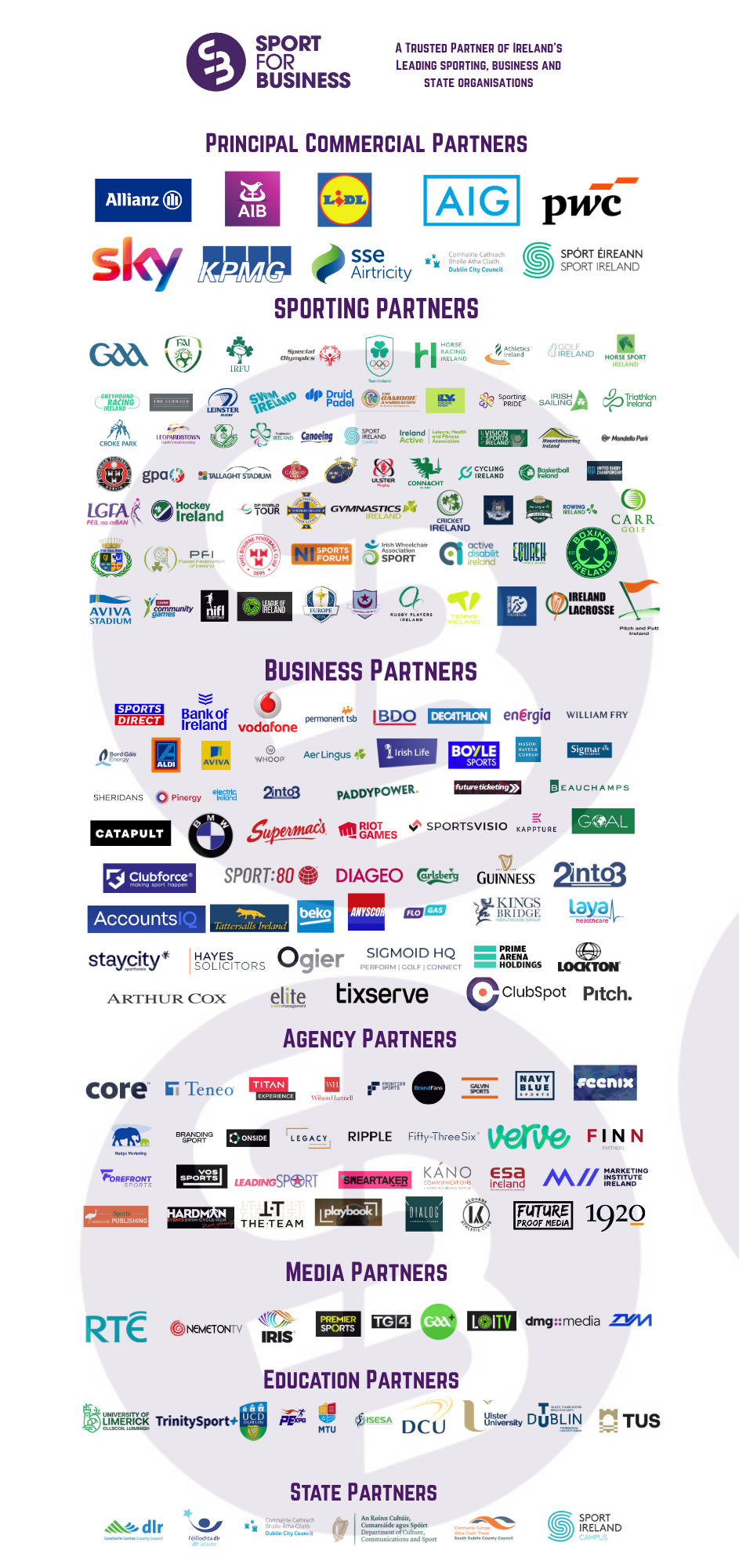
The FAI, the GAA and the Department of Culture, Communications and Sport, as well as all the leading sporting and business organisations in and around the world of sport are among the 300+ members of the Sport for Business community.
This includes all of the leading sports and sponsors, as well as commercial and state agencies, individuals interested in our world, and an increasing number from beyond these shores taking a keen interest in Ireland.
Find out more about becoming a member today.
Or sign up for our twice-daily bulletins to get a flavour of the material we cover.
Sign up for our News Bulletins here.