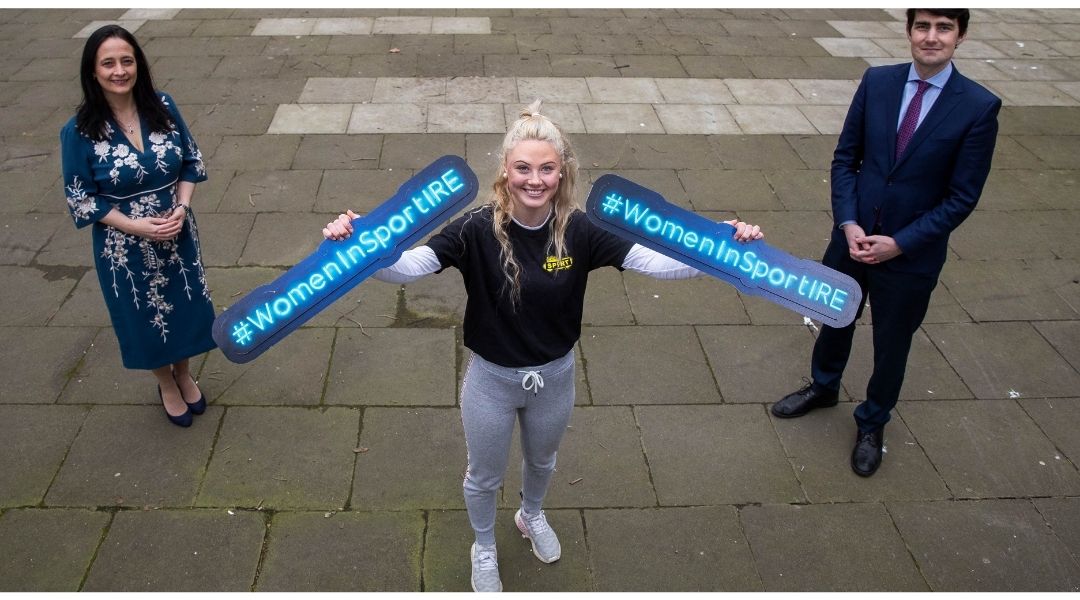
Capability and the feeling of not being “good enough” is the most powerful barrier that prevents inactive girls from taking part in sport., according to new research published this morning by Sport Ireland.
The research was conducted online between August and October 2020.
It also reveals that teenage girls in Ireland have a narrow, and often a negative experience of a small number of traditional (and dominant) team sports in Ireland, and think this is all that sport is and can be.
Girls associate ‘sportiness’ with team and contact sports, so girls who are interested in exercise do not feel targeted with sporting initiatives.
The research is based on detailed work in this area undertaken by Women in Sport UK.
It has identified five key anchors in the lives of teenage girls, ranging from connection to friends, independence of parents and moments of pride fuelling confidence and self-worth.
Sport can clearly play a significant part in most of these anchors but is clearly not hitting the mark for an important number of young girls.
The research has established Eight Principles for Success to engage and connect with teenage girls and to support them to embrace sport and physical activity into their lives:
- No judgement
- Invoke Excitement
- Clear emotional reward
- Open eyes to what is there
- Build on existing habits
- Give girls a voice & choice
- Champion what’s in it for them
- Expand the image of what ‘sporty’ looks like
Sports organisations are being urged to use these Principles for Success to check and challenge existing programmes to enhance appeal and relevance for the target audience.
They can also be used to innovate and develop completely new initiatives through a teenage girl lens.
“Evidence shows that participation levels plummet during adolescence with just 7% of girls aged 14-15 meeting the recommended physical activity levels,” said Sport Ireland Director of Participation and Ethics.
“We also know that girls who are active in their teenage years and develop a love of sport are much more likely to establish a life-long relationship with sport and exercise into adulthood.”
“By really understanding the motivations and attitudes of teenage girls we can now confidently review existing programmes to enhance appeal and relevance for the target audience. We can also use these principles to innovate and develop completely new initiatives.”
“There are many organisations, researchers and others who are working in this space to try and develop interventions to encourage teenage girls to be more active, or to simply stem the dropout rate from sport,” added Women in Sport Lead at Sport Ireland Nora Stapleton.
“I hope that this document can support the work that they are doing. ”
“From a Sport Ireland perspective, we plan to utilise the findings and principles for success and develop a number of pilot projects to run in conjunction with the network of Local Sports Partnerships.”
“To see the motivations and attitudes of this group of young girls so clearly outlined is insightful,” said Minister for Tourism, Culture, Arts, Gaeltacht, Sport & Media, Catherine Martin TD.
“For the first time, we have a true understanding of what is causing teenage girls in Ireland to drop out of sport, or what is preventing them from getting involved in the first place.”
“My vision for women in sport is that of one where women have an equal opportunity to achieve their full potential while enjoying a lifelong involvement in sport. It is encouraging to see the research today which supports this commitment with in-depth research and tangible communication strategies that can be adopted to really encourage our teenage girls to engage and re-engage with sport.”
It is a research project that should be required reading for al of us involved in encouraging girls to get involved and stay involved in sport.
You can read the report in detail by clicking on the image below.

Sport for Business Partners
[logo_carousel_pro id=”51608″]