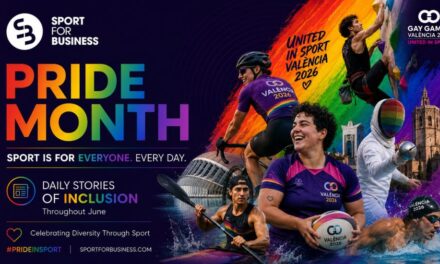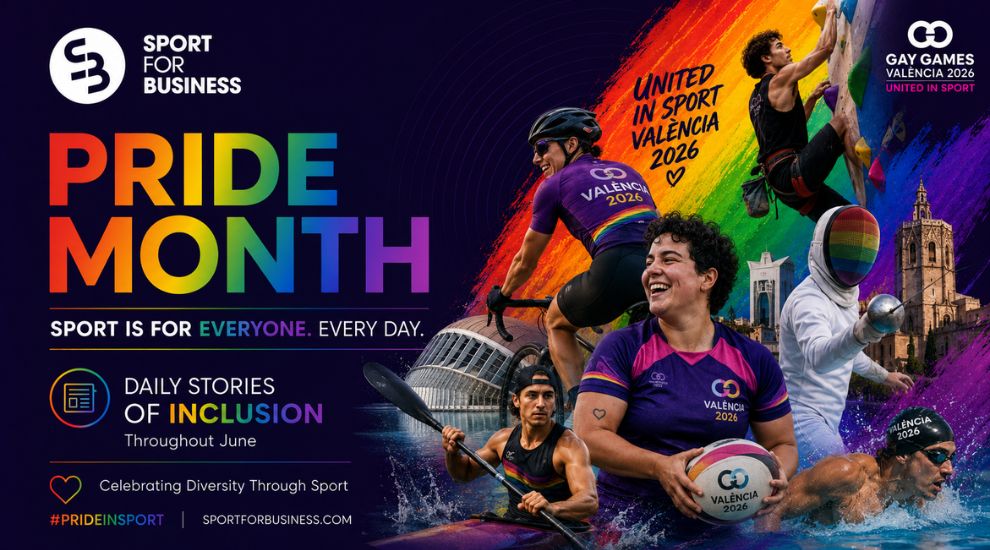
For most international sporting events, the focus is on medals, rankings and elite performance. The Gay Games offer a different perspective on what sport can achieve.
That’s where we are looking in the third of our daily articles throughout Pride Month 2026 focusing on LGBTQI+ issues in Sport
When thousands of athletes, officials and supporters gather in Valencia later this year for the 2026 Gay Games, they will be participating in one of the world’s largest celebrations of inclusion, participation and community through sport.
For Ireland, the event represents an opportunity not only for competition but also for connection, visibility and the strengthening of a growing network of LGBTQ+ sporting communities across the island.
First held in San Francisco in 1982, the Gay Games were founded on a simple principle: sport should be open to everyone. More than four decades later, that philosophy remains at the heart of an event that now attracts participants from dozens of countries and across a wide range of sporting disciplines.
Unlike most major international competitions, qualification standards are not required. Athletes of all abilities are encouraged to take part, reflecting the Games’ emphasis on participation, personal achievement and inclusion.
That ethos has particular relevance at a time when sports organisations around the world are seeking ways to broaden participation and create more welcoming environments.
For Irish athletes, Valencia offers the chance to compete on an international stage while representing a community that has often been underrepresented within sport.
Irish participation in the Gay Games has grown steadily over recent editions. Athletes from running clubs, football teams, rowing clubs, swimming groups, rugby organisations and multi-sport communities have all been represented, often combining competition with advocacy and community building.
Many participants speak of the Games as a transformative experience.
While competition remains important, what often stands out most is the sense of belonging created by an environment where diversity is celebrated rather than merely accommodated.
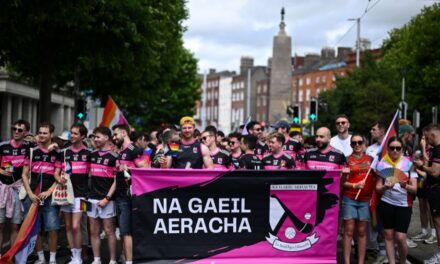
That experience aligns closely with the work being undertaken by organisations such as Sporting Pride Ireland, which has spent recent years helping clubs and governing bodies across Ireland create more inclusive sporting environments.
The organisation’s growing network of affiliated clubs and supporters demonstrates the progress that has been made in Irish sport. Yet Valencia will also provide an opportunity to showcase that progress on a global stage.
There is also a broader lesson for Irish sport.
The Gay Games challenge traditional assumptions about how success in sport is measured. While elite performance remains central to many sporting structures, the Games place equal value on participation, community, wellbeing and personal achievement.
Those priorities increasingly mirror many of the objectives outlined in Irish sports policy, where participation growth, lifelong involvement in sport and social inclusion have become key strategic goals.
The event arrives at a time when Irish sporting organisations are investing heavily in attracting and retaining participants from all sections of society. The experiences of those attending Valencia may offer valuable insights into how clubs and governing bodies can continue to remove barriers to participation.
For some Irish competitors, the journey to Valencia will be about chasing personal bests or competing for medals. For others, it will be about representing their community and demonstrating that sport can be a place where everyone belongs.
For Irish sport as a whole, the Gay Games provide a reminder that participation and performance do not have to be competing priorities.
At their best, they can strengthen one another.
As Irish athletes prepare to travel to Spain, they will join thousands of participants from around the world in an event that celebrates not just sporting achievement, but the power of sport to bring people together.
In a sporting landscape increasingly focused on inclusion, that may be one of the most important victories of all.
 Sporting Pride is a full member of Sport for Business.
If you would like to be part of the Sport for Business community and see your organisation in our content, on our stages, and in the conversation happening every day around the commercial world of Irish Sport, email us today and let’s see what is possible.
Image Credit: Sport for Business
ABOUT SPORT FOR BUSINESS
Sport for Business is Ireland’s leading platform focused on the commercial, strategic and societal impact of sport. It connects decision-makers across governing bodies, clubs, brands, agencies, and public institutions through high-quality content, events, and insights.
Sport for Business explores how sport drives economic value, participation, inclusion and national identity, and how your story can be part of ours.
Through analysis, storytelling and convening the sector, it helps leaders understand trends, share best practices, and make better-informed decisions. It positions sport not just as entertainment but as a vital contributor to Ireland’s social and economic fabric.
Find out more about becoming a member today.
Or sign up for our twice-daily bulletins to get a flavour of the material we cover.